ABS 3D Printing: Strength, Warping and When to Use It
Is ABS the right material for your 3D printed part? Learn where it beats PLA and PETG, how warping is handled and request a quote today.
Dennis
3Dennis
Contents
ABS is the plastic behind LEGO bricks, car dashboards and most of the housings on your desk. In 3D printing it has a reputation as the tough, slightly difficult material: strong and heat tolerant, but also prone to warping and a bit smelly while printing. Both parts of that reputation are true, and both are manageable once you know what you are dealing with.
This article explains where ABS is the right choice, where it is not, and what you should know before you ask for it in a quote.
What makes ABS different
ABS stands for acrylonitrile butadiene styrene. The butadiene part is a rubbery component that makes the material impact resistant. A PLA part snaps when you drop it on a concrete floor, an ABS part usually bounces and survives. That toughness is the main reason engineers keep coming back to it.
The second advantage is heat. ABS stays stable up to roughly 90 to 100 °C, where PLA starts to soften around 55 to 60 °C and PETG around 70 to 75 °C. If a part sits next to a motor, behind a lamp or in a car on a summer day, that margin matters. We cover the full range in our article on heat-resistant 3D printing.
Where ABS is the better choice
Think of enclosures, brackets, clips and covers that take knocks and some warmth. Snap-fits are a good example: ABS flexes a little before it gives up, so a clip can be opened a number of times without cracking. Housings for electronics, jigs that live on a hot production line and replacement parts for machines are typical jobs.
ABS also finishes well. It sands easily, glues with ordinary solvent cement and can be vapor-smoothed to a glossy, almost injection molded look. If appearance matters, have a look at our guide to post-processing 3D prints before you decide.
Where ABS is not the answer
ABS does not like the sun. UV light makes it yellow and brittle within months, so for anything outdoors you should use ASA instead, which is the same family without that weakness. Our article on ASA filament for outdoor use explains the difference.
It is also not the best pick for very large, flat parts, and not for tight tolerances unless the design allows for shrinkage. Which brings us to the main challenge.
Warping and how we deal with it
ABS shrinks as it cools. When the bottom layers cool faster than the top layers, the corners of a part lift off the build plate, and in the worst case the print cracks between layers. This is the warping everyone talks about.
The fix is a mix of process and design. On the process side, a heated bed, an enclosed printer that keeps the air warm and a draft-free environment do most of the work. On the design side, rounded corners instead of sharp ones, a few small “mouse ears” on corners of large flat parts and avoiding thick blocks of solid material help a lot. Allow for roughly 0.5 to 0.8 percent shrinkage when you need a precise fit, and read our notes on tolerances in 3D printing for the details.
Printing ABS also gives off a noticeable smell, which is why it belongs in a ventilated or filtered setup. This is one more reason to leave it to a print service instead of running it on a desktop machine in your office.
ABS, PETG or something else?
A simple rule of thumb: choose PLA for visual models and prototypes, PETG for general functional parts and anything that sees moisture, and ABS when impact strength and heat resistance matter more than easy printing. Choose ASA when the part also lives outside, and nylon when wear and fatigue are the issue. Our material selection guide for business walks through these choices with examples.
Ordering ABS parts from us
PLA and PETG are our standard materials. ABS is available on request, so mention it when you send your file and tell us what the part has to do: the temperature, the load and whether it is used indoors. We will say honestly whether ABS fits or whether another material gets you a better result for less money.
Have a part in mind? Look at our services or contact us with your STL or STEP file and we will come back with a quote and advice on material and orientation.
Keep reading

Heat-Resistant 3D Printing: Which Material to Pick?
PLA softens at 55 °C, ASA and polycarbonate go much higher. Learn which 3D printing material survives your temperatures and request a quote.
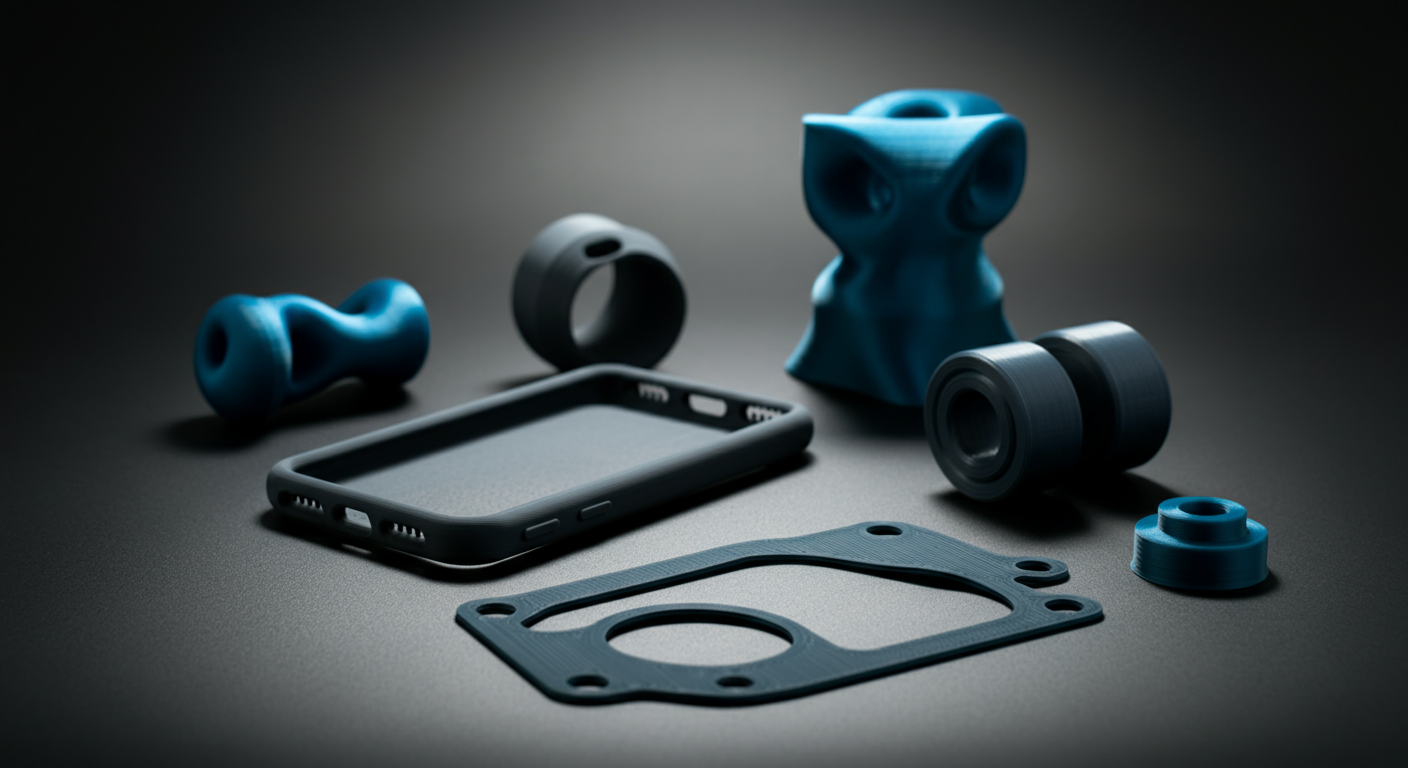
Flexible 3D Printing with TPU: When Rubber Beats Plastic
Discover when flexible TPU prints are the right choice. From vibration dampeners to seals and protective covers: everything businesses and makers need to know about flexible 3D printing.
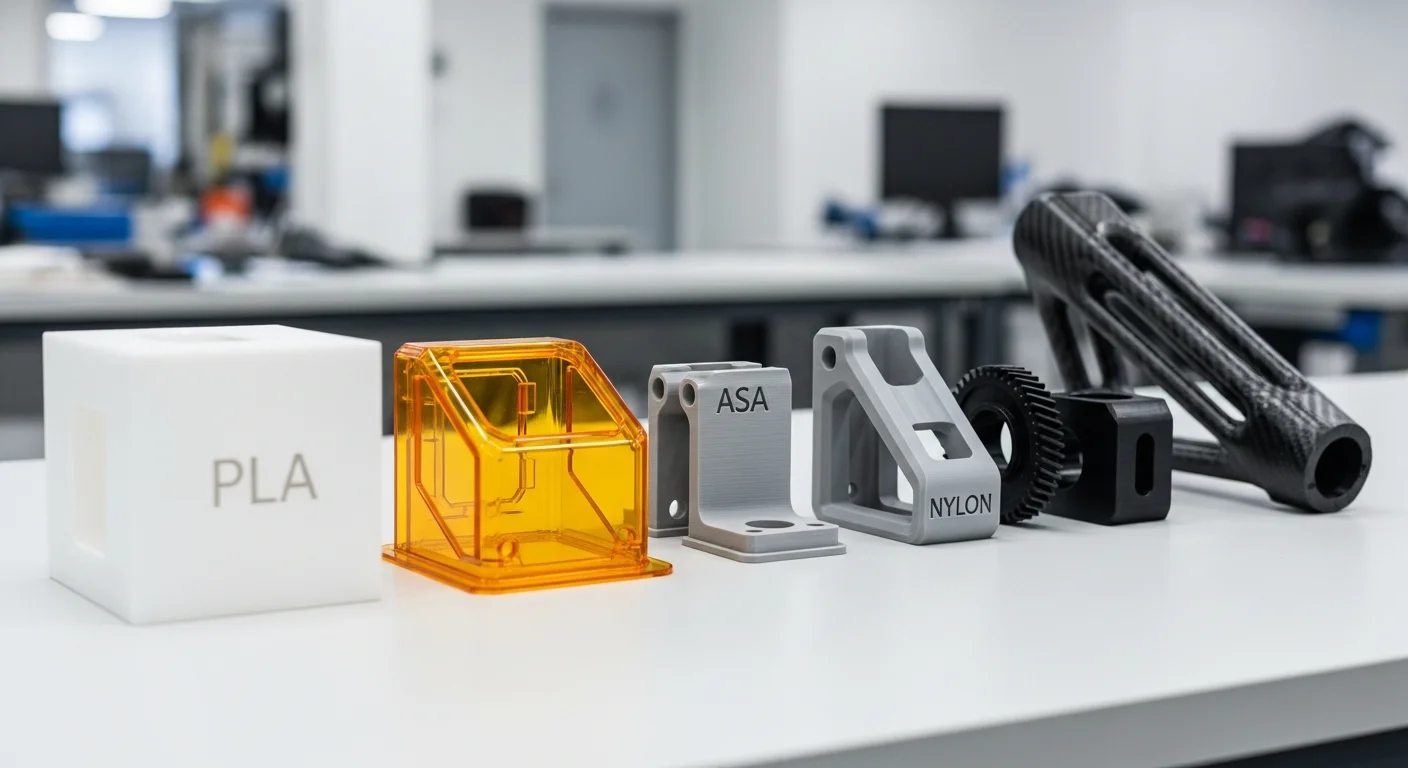
3D Printing Material Selection: A Practical Guide for Business Applications
Choosing the right 3D printing material for your business project. PLA, PETG, ASA, Nylon and more - when to use each material and why it matters for functional parts.
Need help with your project?
Contact us for custom 3D prints or B2B services.