Flexible 3D Printing with TPU: When Rubber Beats Plastic
Discover when flexible TPU prints are the right choice. From vibration dampeners to seals and protective covers: everything businesses and makers need to know about flexible 3D printing.
Dennis
3Dennis
Contents
When people think about 3D printing, they usually picture rigid parts. Housings, brackets, prototypes. But there’s another side of additive manufacturing that gets less attention yet delivers enormous practical value: flexible 3D printing with TPU.
TPU stands for thermoplastic polyurethane, a material best described as printable rubber. Flexible, wear-resistant, and shock-absorbing. And it prints on standard FDM machines, no special equipment required. That opens up a category of applications that rigid plastics like PLA or PETG simply can’t handle.
What Makes TPU Different?
The defining characteristic is elasticity. Where PLA snaps under stress, TPU bounces back. This makes it ideal for parts that need to absorb impacts, create seals, or flex repeatedly without failing.
TPU also has outstanding abrasion resistance. Components that contact other materials, such as sliding bearings, wheels, or conveyor guides, last significantly longer in TPU than in hard plastics. That directly translates to less maintenance and lower replacement costs over time.
Chemical resistance is another advantage. TPU holds up well against oils, greases, and many cleaning agents, making it relevant for industrial and food-adjacent applications.
Practical Business Applications
The most valuable TPU applications in a business setting are parts that contact, seal, or dampen.
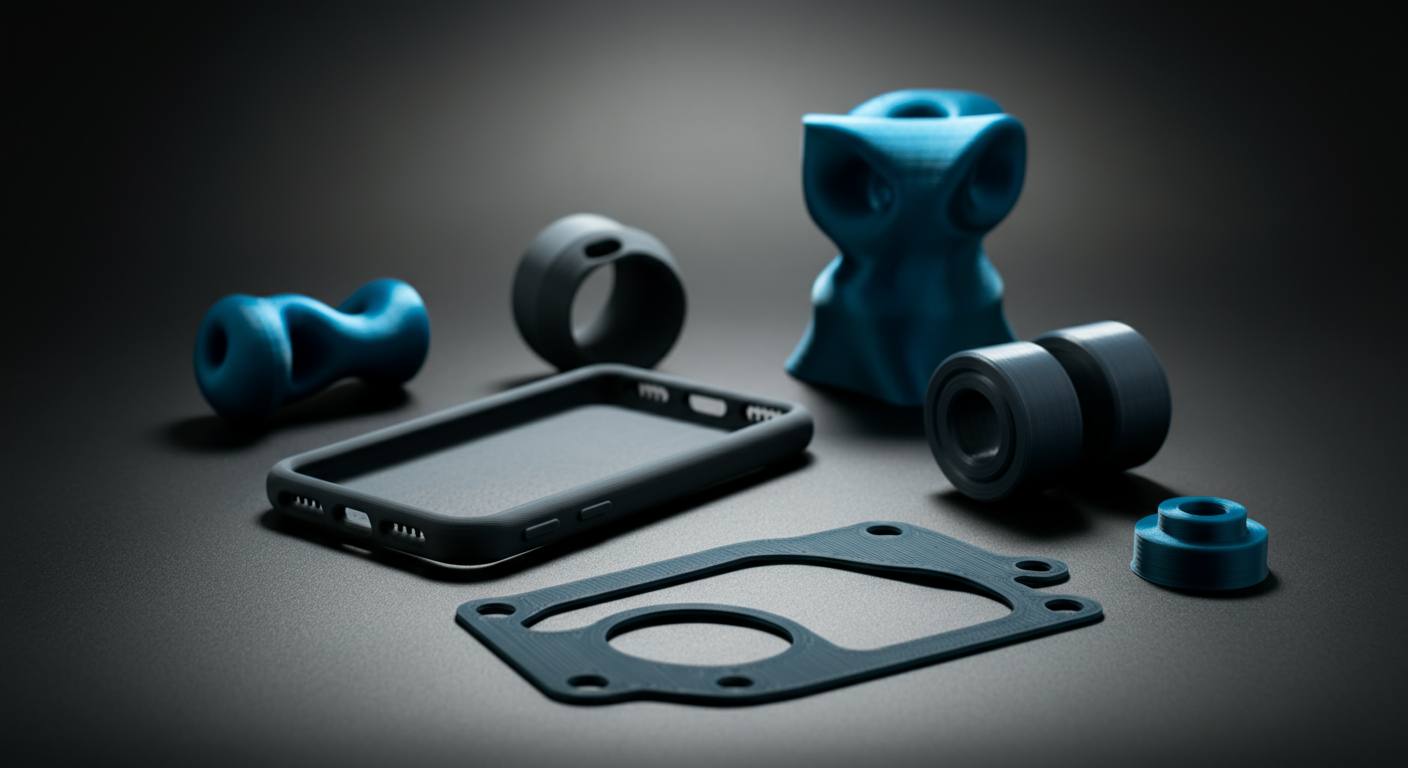
Custom gaskets and seals are a prime example. Bespoke seals for machinery, pipe fittings, or equipment enclosures. With traditional rubber manufacturing, that typically means minimum order quantities of hundreds of pieces from a specialist supplier. With TPU, you print one when you need one, dimensioned exactly to your machine. This pairs well with on-demand manufacturing to reduce inventory.
Vibration dampeners and bumpers are another strong use case. Machinery that vibrates, equipment that can be bumped, carts that roll into walls. TPU bumpers are fast to print, inexpensive, and perform exactly as intended.
Ergonomic grips and handles for tools or equipment are popular as well. A printed TPU sleeve over a metal shaft adds comfort and grip, just like rubber, but custom-fit to your specific tool geometry.
For businesses that regularly order custom jigs, fixtures, and tooling, TPU expands the material repertoire significantly.
For Individuals: More Than You’d Expect
Personal applications for TPU are broader than most people realize.
The obvious examples are phone cases and protective covers. But flexible printing goes further. Keychains that flex without snapping, protective corner guards for furniture, anti-slip pads for kitchen accessories, shift knob covers for the car. Small applications that simply work better in a flexible material than in hard plastic.
In smart home contexts, there are interesting opportunities too. Dampeners for automations that click when moving, soft mounts for sensors that shouldn’t shift over time. Projects involving smart home wall mounting often have small spots where TPU outperforms everything else.
Not Everything Suits TPU
Flexible printing has limitations worth understanding before starting a project.
TPU is harder to print than standard materials. The soft filament can deform in the extruder if settings aren’t dialled in correctly. Overhangs without support are challenging, and print speeds need to be lower than with PLA. It’s a material that requires considered setup.
TPU is also less dimensionally precise than rigid materials for very fine details. If your part requires tiny features or very sharp edges, a harder material is often the better choice.
Finally, TPU isn’t suited for high temperatures. Sustained exposure above 60-80 degrees Celsius degrades its properties. For engine-adjacent components or environments near heat sources, other materials perform better.
How to Know If TPU Is the Right Choice
The rule of thumb is straightforward: if your part needs to flex, dampen, seal, or repeatedly contact other surfaces, TPU is worth considering.
Ask yourself: what happens when this part is dropped or compressed? If the answer is “it breaks,” and that’s a problem, a flexible material is the right direction.
At 3Dennis we regularly print in TPU for both business and individual customers. We know how to dial in the material settings and can advise on the appropriate hardness (TPU comes in various Shore values) for your specific use case.
Want to know whether your project is a good fit for flexible 3D printing? Browse our services or contact us directly. We’re happy to help you figure it out.
Keep reading
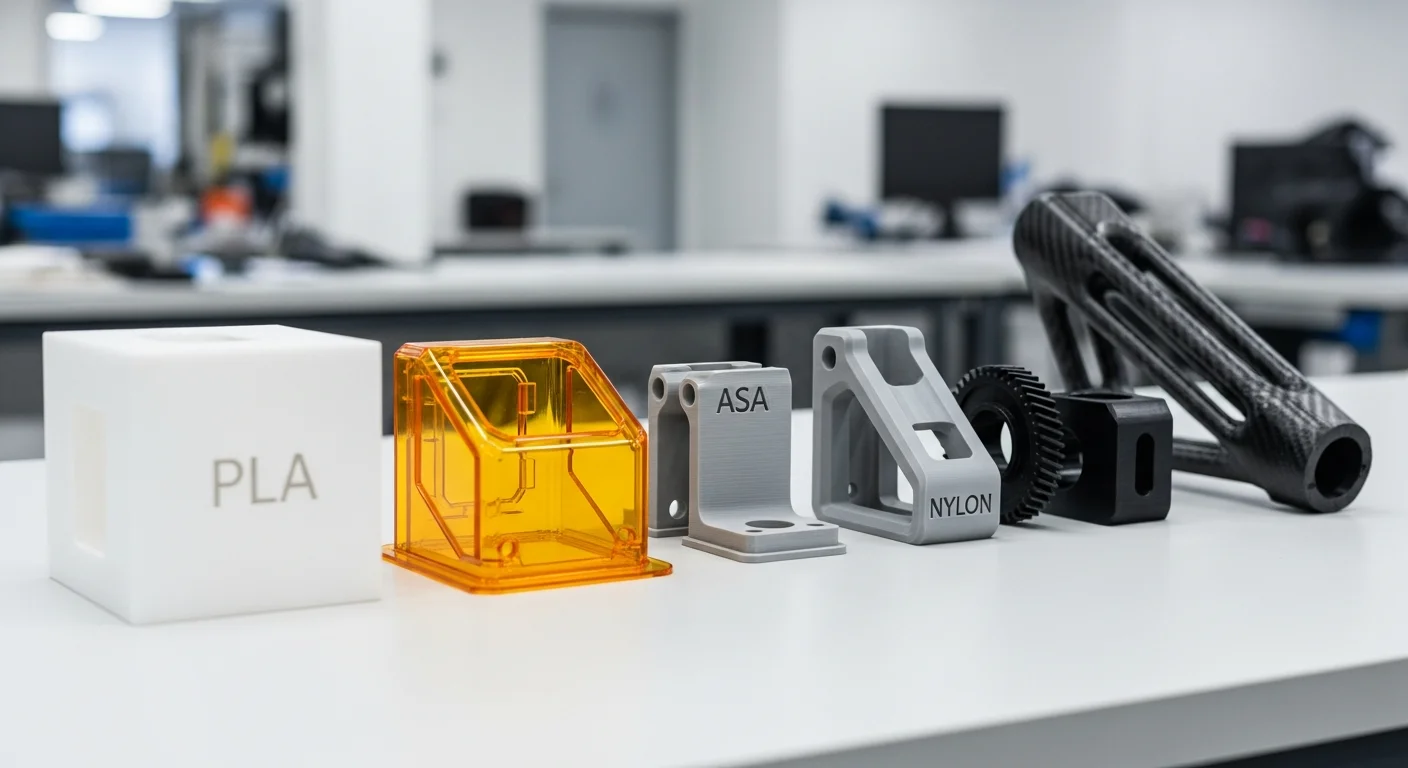
3D Printing Material Selection: A Practical Guide for Business Applications
Choosing the right 3D printing material for your business project. PLA, PETG, ASA, Nylon and more - when to use each material and why it matters for functional parts.
Digital Inventory: How 3D Printing Eliminates the Need for Physical Stock
Discover how businesses replace costly physical warehouses with digital 3D print files. Print parts on demand and cut storage costs dramatically.
Outsourcing 3D Printing vs In-House: What's Best for Your Business?
Should your business invest in 3D printers or outsource to a print service? Compare costs, speed, and flexibility to make the right decision.
Need help with your project?
Contact us for custom 3D prints or B2B services.