3D Printing Material Selection: A Practical Guide for Business Applications
Choosing the right 3D printing material for your business project. PLA, PETG, ASA, Nylon and more - when to use each material and why it matters for functional parts.
Dennis
3Dennis
Contents
When a business turns to 3D printing for the first time, the conversation about materials often starts with a simple question: “What should we print this in?” The answer, however, is never simple. The right material depends on where the part will live, what forces it will endure, what temperatures it will face, and how long it needs to last.
Unlike consumer 3D printing where PLA is the default for nearly everything, business applications demand a more deliberate approach. A jig used on a factory floor has different requirements than a client-facing enclosure. An outdoor mounting bracket needs different properties than an internal cable guide. Getting this decision right from the start saves time, money, and failed parts.
Why Material Selection Matters More Than You Think
Choosing the wrong material for a business application doesn’t just result in a broken part. It erodes trust. If you deliver a component to a client that warps in the sun or cracks under load after two weeks, the failure reflects on your entire operation. Conversely, selecting an overly expensive engineering material for a simple bracket wastes budget without adding value.
The goal is matching material properties to application requirements with precision. This is where 3D printing for business diverges sharply from hobbyist printing: every material choice is a business decision with real consequences.
The Core Materials and Where They Excel
Rather than listing every filament on the market, let’s focus on the materials that matter most for business applications and the scenarios where each one is the right choice.
PLA: The Starting Point for Prototypes
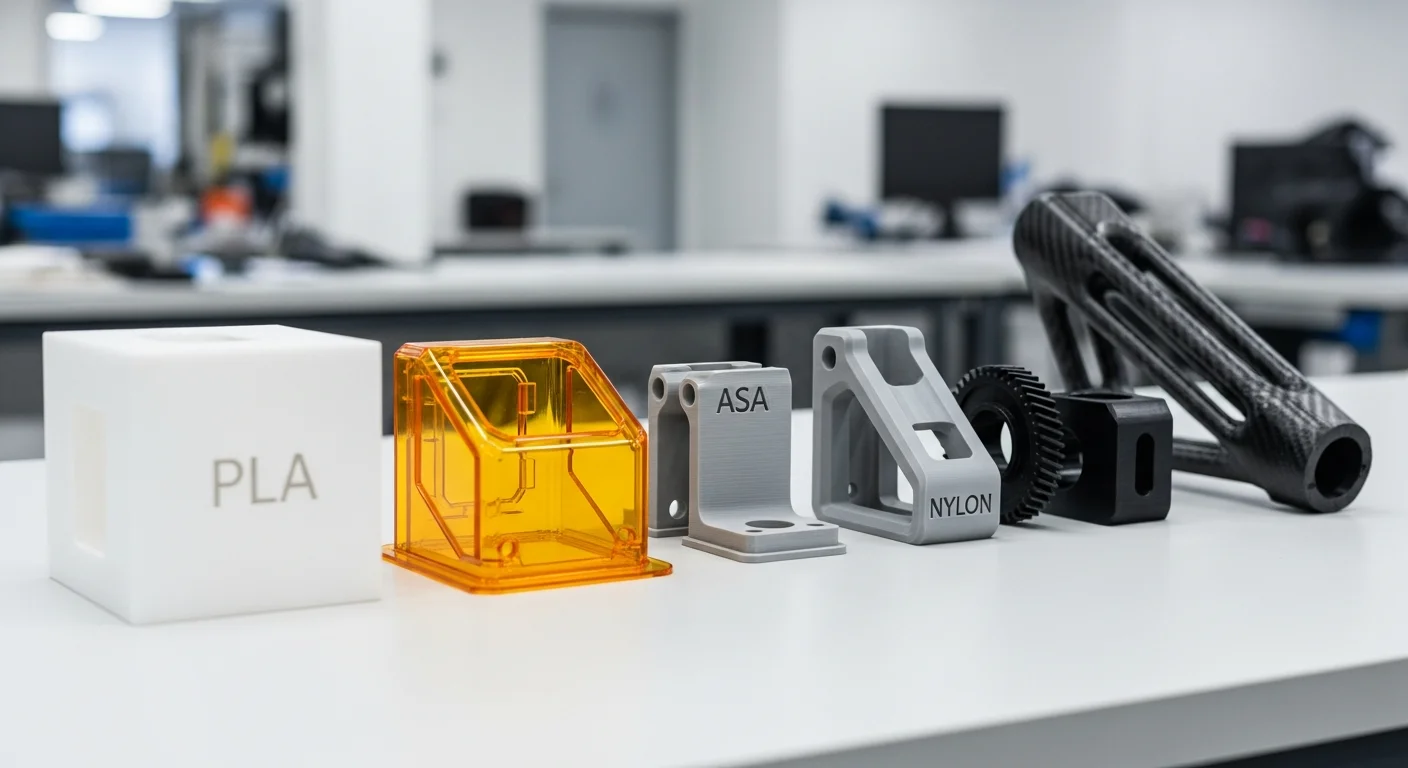
PLA (Polylactic Acid) is the easiest material to print and produces excellent surface finishes. It’s stiff, dimensionally accurate, and available in virtually every color. For visual prototypes, concept models, and internal communication tools, PLA does the job well.
Where PLA falls short is durability. It’s brittle under impact, softens at relatively low temperatures (around 55-60 degrees Celsius), and degrades slowly when exposed to moisture over long periods. For anything that needs to function under real-world stress, PLA is a temporary solution at best.
Best for: Prototypes, fit checks, visual models, trade show displays, internal presentations.
PETG: The Workhorse for Functional Parts
PETG (Polyethylene Terephthalate Glycol) occupies the sweet spot between printability and performance. It’s significantly tougher than PLA, resists impact and flexing, handles moderate temperatures (up to about 75-80 degrees Celsius), and offers good chemical resistance.
For the majority of functional business parts, PETG is the first material we recommend. It prints reliably, bonds well between layers (which means stronger parts), and holds up in indoor environments for years. Custom enclosures, internal brackets, production fixtures, cable management solutions - PETG handles all of these with confidence.
We’ve covered the specifics of PETG’s outdoor capabilities in our article on PETG for outdoor applications. While it performs reasonably well outside, there are better options for prolonged UV exposure.
Best for: Functional indoor parts, custom enclosures, mechanical components, food-contact applications.
ASA: Built for the Outdoors
ASA (Acrylonitrile Styrene Acrylate) is what you reach for when parts need to survive outdoors. It offers excellent UV resistance, meaning it won’t yellow, become brittle, or lose strength from sun exposure. Its temperature resistance is higher than PETG, and it provides good impact strength even in cold conditions.
ASA is a demanding material to print. It requires an enclosed, heated build chamber to prevent warping and cracking. But for outdoor signage brackets, equipment housings, agricultural components, or any part that faces the elements daily, ASA is the professional choice.
Best for: Outdoor housings, UV-exposed fixtures, automotive components, weatherproof brackets.
Nylon (PA): When Strength and Flexibility Meet
Nylon is the go-to material when a part needs to combine strength with flexibility. It absorbs impact without cracking, offers excellent wear resistance, and handles repeated mechanical stress that would fracture stiffer materials.
Production jigs and fixtures often benefit from nylon. A fixture that clamps onto a part thousands of times per day needs a material that won’t fatigue or crack. Similarly, functional hinges, snap fits, and sliding components perform better in nylon than in any other commonly printed material. We regularly produce custom jigs and fixtures in nylon for clients whose production environments demand this level of durability.
The trade-off is that nylon absorbs moisture from the air, which affects its dimensions and mechanical properties. Proper storage and drying before printing are essential. This is an area where working with an experienced printing partner pays off.
Best for: Jigs, fixtures, gears, snap-fits, hinges, wear-resistant components, high-impact applications.
Carbon Fiber Reinforced Materials: Maximum Rigidity
Adding carbon fiber to a base material (typically nylon or PETG) dramatically increases stiffness while keeping weight low. Carbon fiber reinforced filaments are the choice when a part needs to resist deflection under load, act as a structural element, or replace a metal component where weight matters.
The resulting parts feel and perform more like engineered components than typical 3D prints. Tooling arms, robot end-effectors, precision alignment fixtures - these applications benefit enormously from carbon fiber reinforcement.
Best for: Structural parts, lightweight tooling, metal replacement, high-stiffness applications.
Matching Material to Application: A Decision Framework
Rather than memorizing material data sheets, a practical approach works better for most business decisions. Ask three questions about your part:
Where will it operate? Indoor-only parts open up the widest material choices. Outdoor exposure narrows the field to ASA or treated alternatives. High-temperature environments require specialty materials.
What forces will it experience? Static loads (holding weight) favor stiff materials like PETG or carbon fiber composites. Dynamic loads (repeated flexing, impact) point toward nylon. Low-stress applications can use PLA for cost efficiency.
How long must it last? Prototypes and bridge manufacturing parts might only need weeks of service life. Production tooling might need to survive years. End-use components shipped to customers need to outlast warranty periods. The longevity requirement often dictates the material more than any other factor.
Common Mistakes in Material Selection
Working with business clients across industries, we see the same material selection errors repeatedly.
Over-engineering: Choosing an expensive specialty material for a simple application. Not every bracket needs carbon fiber nylon. A PETG bracket that costs a third as much often does the job perfectly.
Under-engineering: Printing functional outdoor parts in PLA because it’s cheaper and easier. The savings evaporate when those parts need replacing every few months.
Ignoring the environment: Failing to account for temperature fluctuations, chemical exposure, or UV radiation. A part that works perfectly in the testing lab can fail quickly when installed in its actual operating environment.
Neglecting post-processing: Some materials respond well to annealing (heat treatment) which can dramatically improve temperature resistance and strength. Understanding these options is part of the broader design for 3D printing conversation that should happen before production begins.
The Value of Expert Guidance
Material selection is one of the areas where experience makes the biggest difference. The data sheets tell you tensile strength and heat deflection temperature. What they don’t tell you is how a material behaves in your specific combination of wall thickness, infill pattern, print orientation, and real-world loading conditions.
At 3Dennis, we’ve printed thousands of business parts across every material discussed in this guide. We know which materials perform best for which applications, not because we read about it, but because we’ve tested it, shipped it, and followed up with clients to see how parts perform months later.
When you bring us a project, material selection is part of the conversation from day one. We’ll recommend the most cost-effective material that meets your requirements, explain the trade-offs honestly, and produce sample parts for validation when needed.
Start With the Right Material
The difference between a 3D printed part that performs for years and one that fails in weeks often comes down to a single decision made at the beginning of the project: material selection. Getting it right means your parts work, your customers are satisfied, and your costs stay predictable.
Explore our services to see how we help businesses select and produce the right parts, or contact us to discuss your specific application. We’ll help you find the material that fits your requirements and your budget.
Keep reading
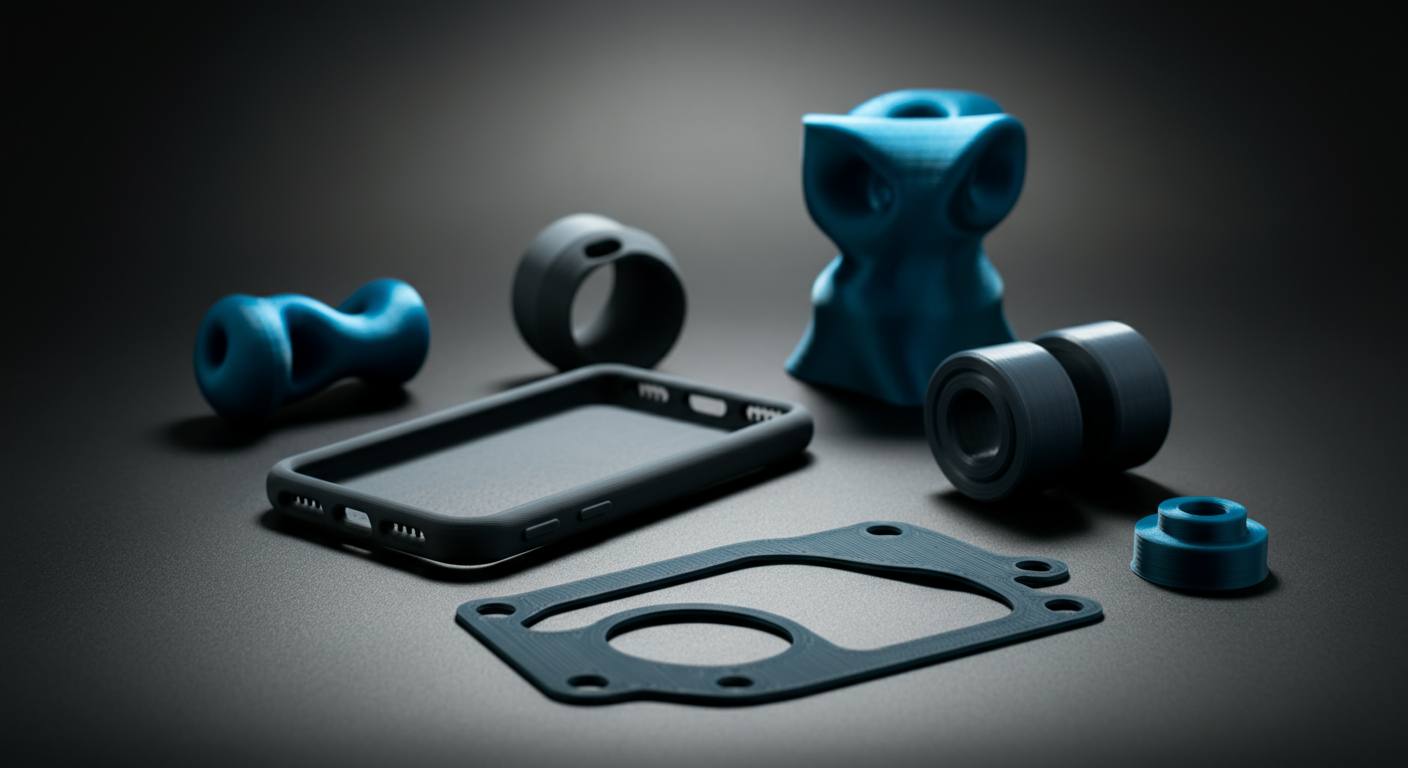
Flexible 3D Printing with TPU: When Rubber Beats Plastic
Discover when flexible TPU prints are the right choice. From vibration dampeners to seals and protective covers: everything businesses and makers need to know about flexible 3D printing.
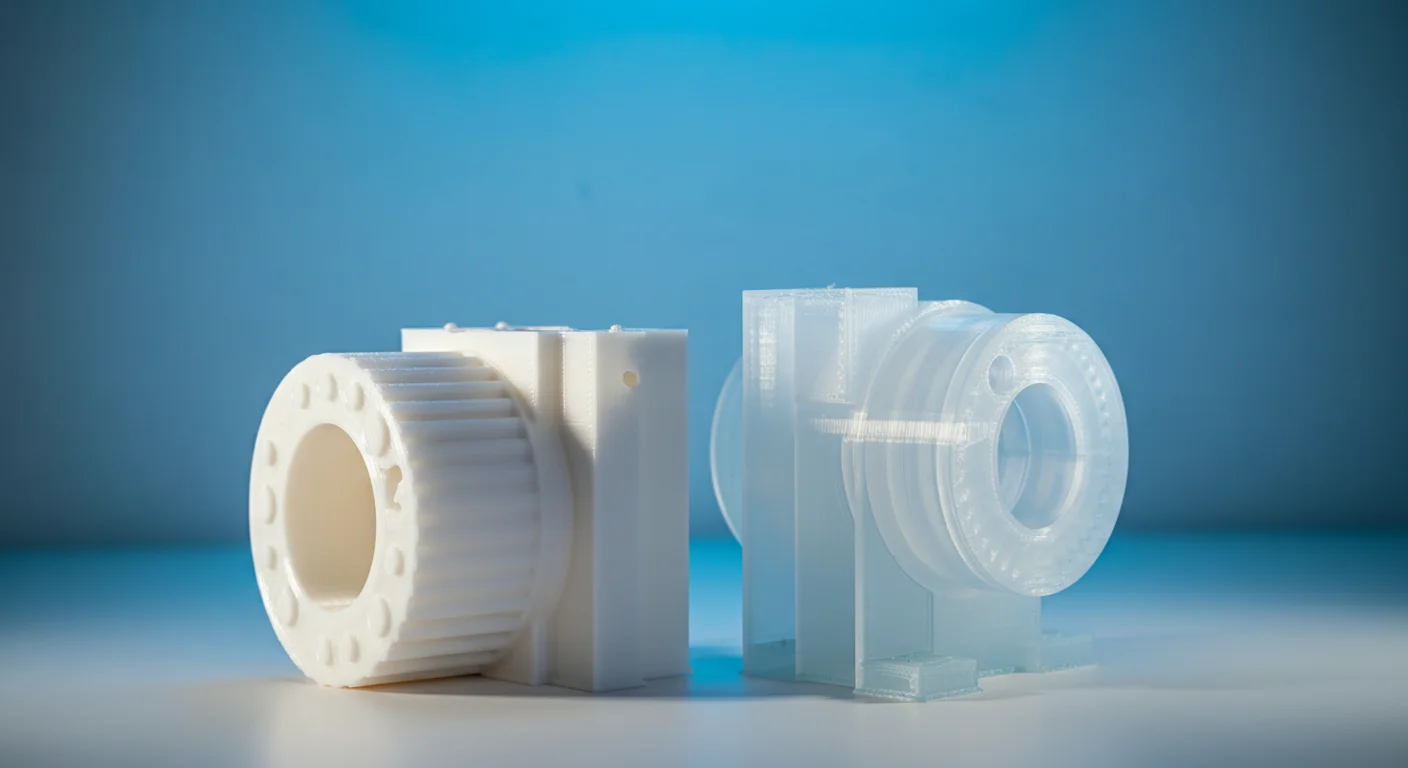
PLA vs PETG: Which Material Should You Choose for Your 3D Print?
PLA or PETG for your 3D print project? Discover the differences in strength, temperature resistance, printability and cost. A practical comparison for hobbyists and businesses alike.
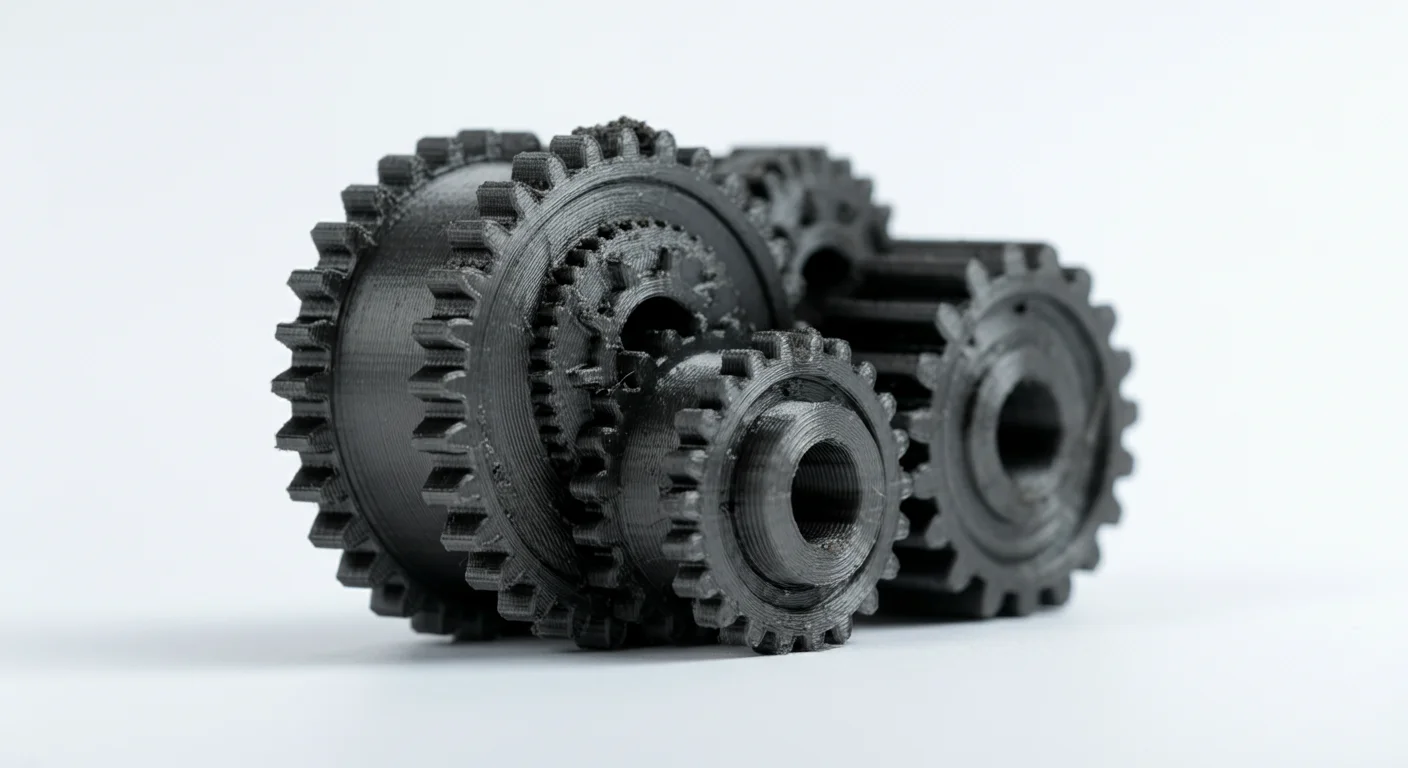
Nylon 3D Printing: The Ideal Choice for Technical Parts
Why nylon (PA12/PA6) is the go-to material for technical 3D printing applications. Strong, flexible, wear-resistant - discover when nylon is the right choice.
Need help with your project?
Contact us for custom 3D prints or B2B services.