Polycarbonate 3D Printing: Strong, Heat-Resistant and Transparent
Polycarbonate is one of the strongest 3D printing materials: heat-resistant up to 110°C, impact-tough, and optionally transparent. Discover when PC is the right choice.
Dennis
3Dennis
Contents
When PLA is too weak and nylon too flexible, polycarbonate (PC) is often the right step up. It is one of the technically strongest materials available through FDM 3D printing: remarkably tough, resistant to high temperatures, and in transparent versions also optically interesting.
But PC has its quirks. It is demanding to print and places high requirements on the printer. In this article we explain what makes polycarbonate unique, for which applications it excels, and when it is the right choice over alternatives like nylon or PETG.
What makes polycarbonate so special?
Mechanical properties
Polycarbonate is known as one of the stiffest and most impact-resistant thermoplastic materials. It absorbs energy on impact without breaking, a property known in the industry as high impact toughness. PC parts tend to bend under extreme load rather than fracture, which is safer in many applications.
By comparison: PLA has higher stiffness but is more brittle. PETG is more flexible but weaker under pressure. Nylon is tougher but less rigid. PC finds a balance that is particularly valuable for technical components.
Temperature resistance
This is where polycarbonate really stands out. The glass transition temperature of PC is around 110°C to 130°C, depending on the specific formulation. That is significantly higher than PLA (60°C) and comparable to or higher than ABS (90-100°C), without the challenging shrinkage and toxic fumes of ABS.
In practice, this means PC parts remain functional in hot environments: engine bays, industrial ovens, equipment that undergoes sterilisation, or components near heat sources.
Transparency
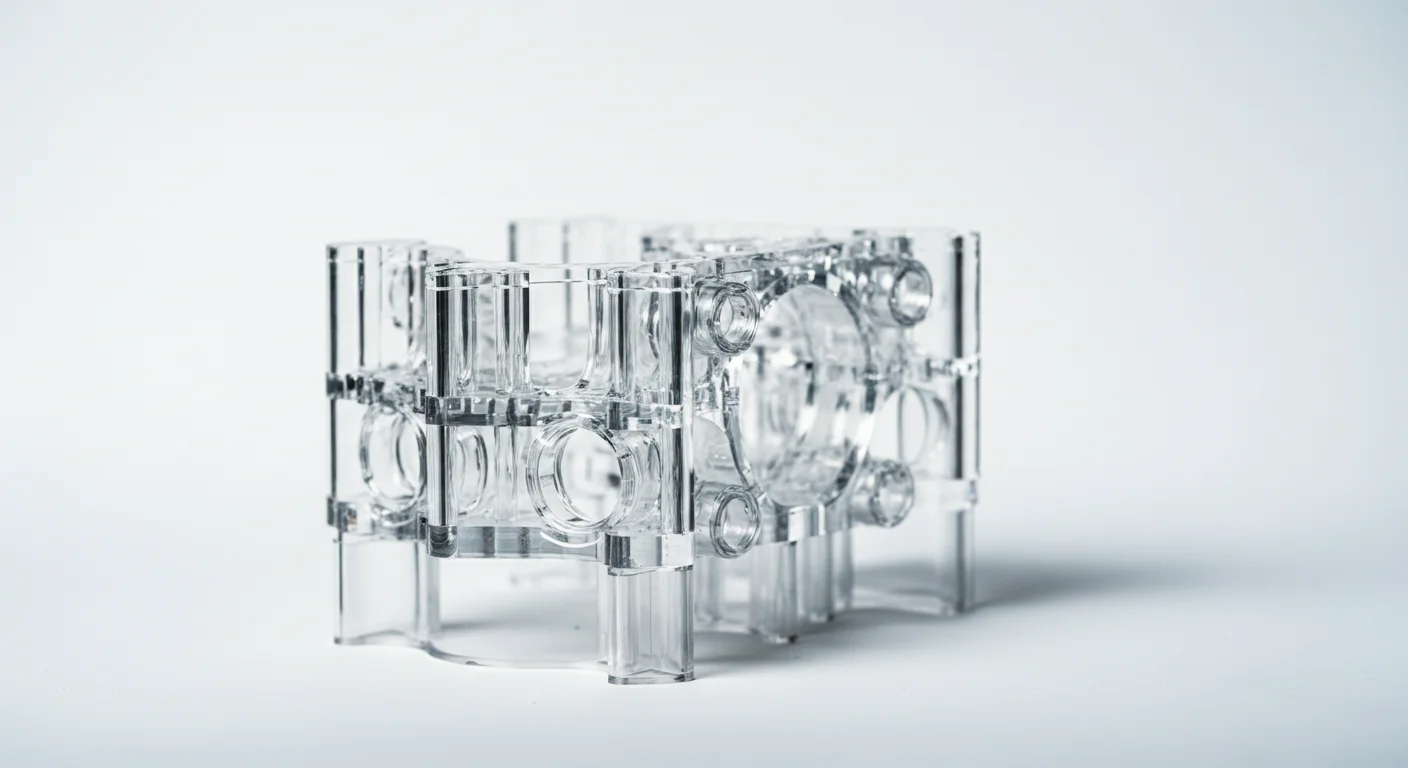
Standard PC is light-transmitting. With the right print settings and post-processing, you can produce components that are nearly glass-clear. This opens up applications that are simply not possible with opaque materials: optical components, protective covers for displays, LED diffusers.
Flame retardancy
PC is inherently flame-retardant. In many cases it meets UL94 V-2 or even V-0 ratings, meaning it self-extinguishes when the ignition source is removed. This is critical for electrical components and applications where fire safety is a requirement.
When do you choose polycarbonate?
PC is the right choice when one or more of these factors apply:
High operating temperatures: if the part is exposed above 80°C, PC is a serious candidate. PLA fails at those temperatures, PETG starts to soften.
Impact loading: for parts that must absorb knocks, drops, or shocks, the toughness combination of PC is hard to match.
Electrical insulation with fire safety: the UL94 rating makes PC popular for switchboxes, connector housings, and other electrical applications.
Optical transparency: if a component needs to be see-through and mechanically strong, PC is the only FDM material that offers both.
When should you choose something else?
Polycarbonate is not always the best choice:
- PETG is easier to process, cheaper, and sufficient for most non-extreme applications up to 70°C.
- Nylon (PA12/PA6) is better for parts that undergo heavy friction or repeated flexing.
- ASA is better for outdoor applications due to UV resistance, something PC does not excel at.
Also read our material selection guide for businesses for a complete overview.
Applications in practice
Electronics and enclosures
PC housings for electronics offer advantages on multiple fronts: flame retardancy, temperature resistance, and the mechanical strength to provide protection from drops and impacts. Switchboxes, control boxes, and instrument housings are classic applications.
Automotive and machine building
In engine bays or near exhaust systems, temperatures are a constant challenge. PC parts survive environments that damage PLA and even PETG. Brackets, clamps, cooling channel guides, and sensor mounts are typical applications.
Medical and laboratory instruments
Certain PC formulations are autoclavable, allowing steam sterilisation at 121°C. For medical devices and lab components that need repeated sterilisation, this is a key property.
Transparent protective covers
From machine windows to protective screens and LED diffusers: the transparency of PC makes it the go-to choice for optical applications that also require mechanical strength.
The challenge of printing PC
Polycarbonate is demanding. Printing requires high temperatures (hotend 260-310°C, heated bed 90-130°C) and a well-enclosed print environment to prevent warping. PC also absorbs moisture from the air, which negatively affects print quality if the filament is not stored properly.
This is exactly why professional outsourcing makes more sense for many businesses than printing PC in-house. Investing in a suitable printer and mastering the right parameters takes time and money. For occasional or even regular orders, outsourcing is cheaper and delivers more consistent results.
What 3Dennis offers
We print polycarbonate parts on professional machines configured specifically for this material. That means consistent results, without the hassle of setting up your own workflow.
Whether you need a prototype to test the properties, or small production runs for a manufacturing application, we deliver quickly and reliably.
Get in touch for a quote, or explore our services overview to see what else we can offer.
Not sure whether PC is the right choice for your application? Describe your use case and we will think it through with you.
Keep reading
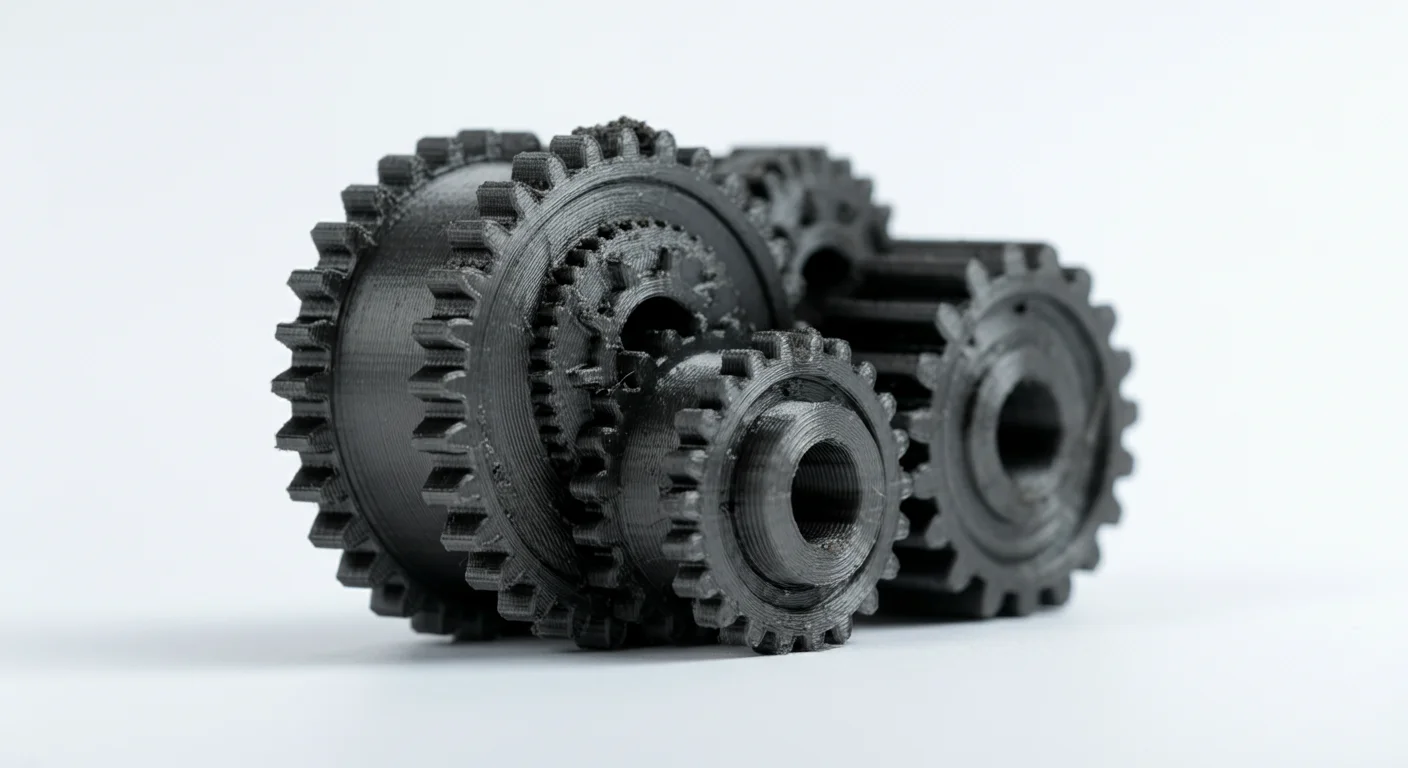
Nylon 3D Printing: The Ideal Choice for Technical Parts
Why nylon (PA12/PA6) is the go-to material for technical 3D printing applications. Strong, flexible, wear-resistant - discover when nylon is the right choice.
3D Printing Costs Explained: What Determines the Price of Your Print?
What does 3D printing actually cost? Discover which factors determine the price: material, print time, complexity, post-processing, and more. With practical examples.
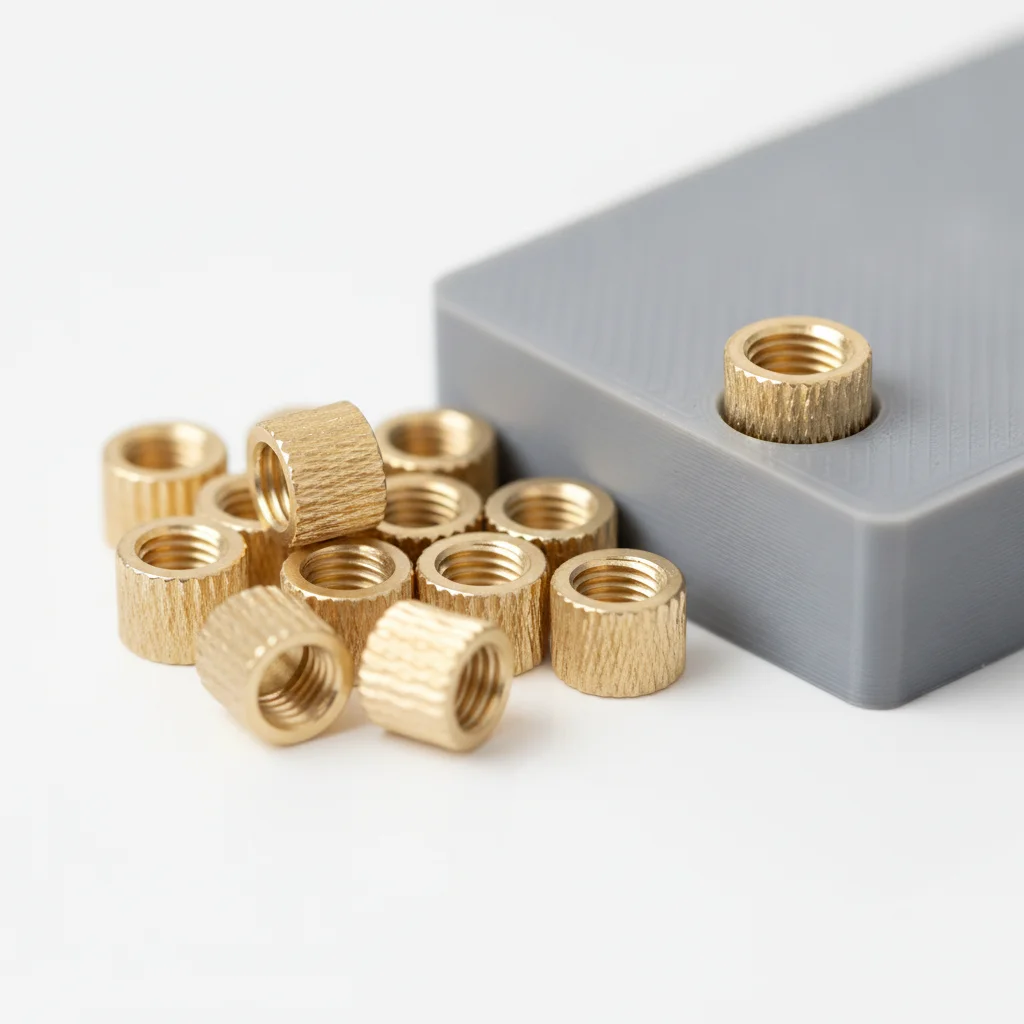
Threaded Inserts in 3D Prints: Professional Strength Connections
Learn how brass heat-set inserts transform your 3D printed parts into professional-grade components with durable, reusable threaded connections.
Need help with your project?
Contact us for custom 3D prints or B2B services.