Nylon 3D Printing: The Ideal Choice for Technical Parts
Why nylon (PA12/PA6) is the go-to material for technical 3D printing applications. Strong, flexible, wear-resistant - discover when nylon is the right choice.
Dennis
3Dennis
Contents
Why Nylon is the Preferred Choice for Technical Applications
When it comes to functional parts that genuinely need to perform, PLA falls short quickly. Nylon, particularly PA12 and PA6, is the material engineers and manufacturing companies increasingly reach for when they need 3D printed parts that hold up in the real world. Strong, lightweight, wear-resistant and chemically stable: nylon delivers a combination of properties that is hard to match.
But nylon printing is not without its challenges. In this article, we explain what makes nylon so special, when to choose it over alternatives like PETG or ABS, and which applications benefit most from its properties.
The Properties of Nylon: What Makes It So Good?
Nylon (polyamide) stands apart through a unique combination of mechanical properties. Where many other 3D printing materials must choose between strength and flexibility, nylon offers both. It is tough enough to absorb impact without breaking, yet rigid enough for precise geometries.
Wear resistance is particularly impressive. Nylon parts last longer in applications with friction, making them ideal for gears, bearings, sliders and other moving components. Compare this to PLA, which wears out rapidly under similar conditions.
Chemical resistance is another strong point. Nylon withstands most lubricants, fuels and everyday solvents. In industrial environments where parts are regularly exposed to cleaning agents or coolants, this is a decisive advantage.
Finally: thermal stability. PA12 maintains its shape at temperatures up to approximately 100-110°C, PA6 slightly higher. For parts near motors, lighting systems or other heat sources, this is critical.
PA12 vs PA6: The Difference in Practice
Within the nylon family, PA12 and PA6 are the most widely used variants for 3D printing, and they each have their own character.
PA12 has a lower moisture absorption rate than PA6. This sounds technical, but it has major practical implications: PA12 parts are dimensionally more stable in humid environments and better retain their mechanical properties over time. For outdoor applications or environments with fluctuating humidity, PA12 is generally the better choice.
PA6 is mechanically somewhat stronger and stiffer, with higher wear resistance. In situations where maximum strength and stiffness are the priority and humidity is manageable, PA6 can have the edge.
For most industrial applications, PA12 is the workhorse. It also prints better via Selective Laser Sintering (SLS), resulting in parts without visible layer lines and with isotropic strength in all directions.
Applications Where Nylon Excels
The versatility of nylon makes it applicable across a wide range of sectors and products.
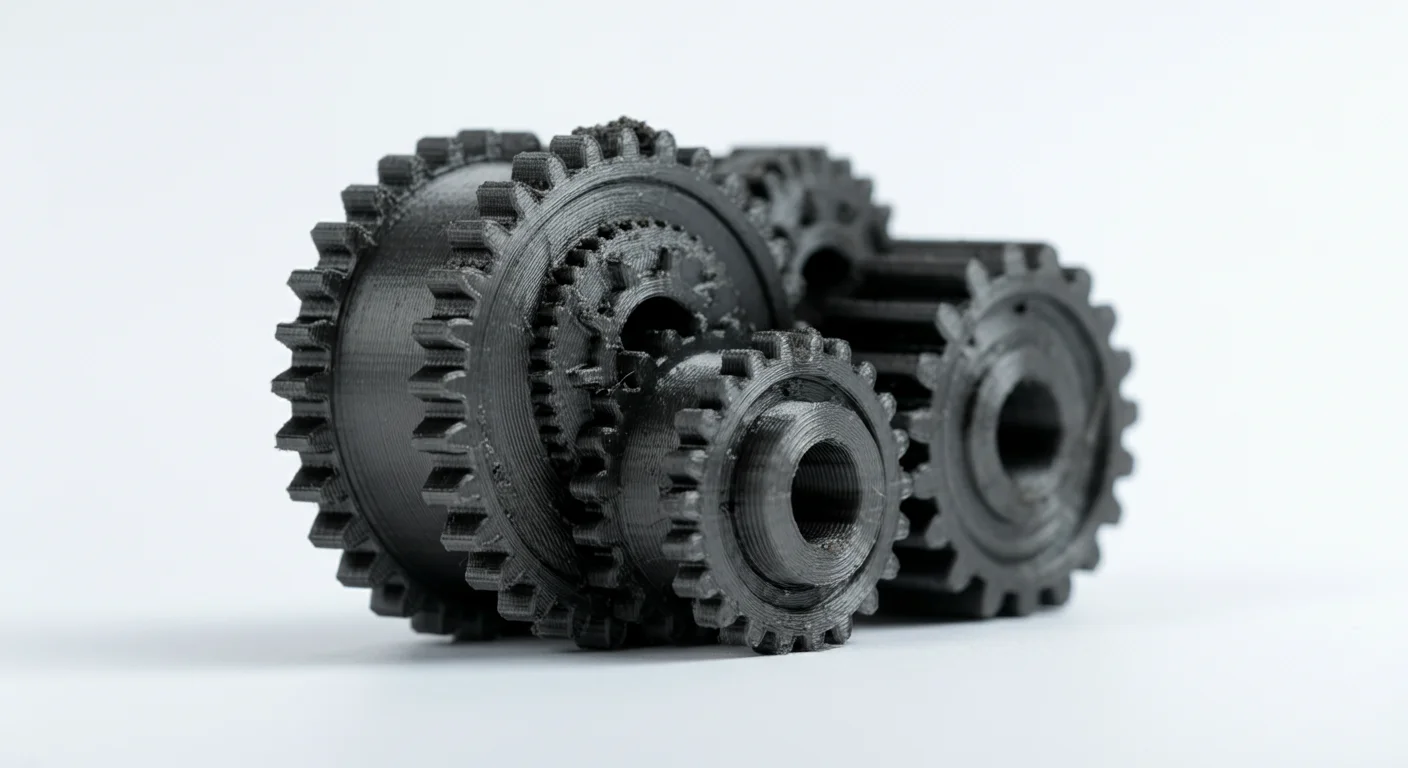
Gears and drive components: The combination of wear resistance and toughness makes nylon perfect for gears in light drive systems. They run quieter than metal gears, are self-lubricating and light enough to reduce load on drive motors.
Cable glands and clamps: Nylon offers the flexibility to create snap-fit connections that click reliably time and again, without breaking. Cable clamps, glands and mounting clips in nylon last significantly longer than PLA or PETG equivalents.
Jigs and fixtures for assembly: In production lines, moulds and positioning tools must be used dozens or hundreds of times daily. Nylon jigs wear minimally, maintain their dimensions and do not damage workpieces.
Protective enclosures in demanding environments: Electrical junction boxes, sensor housings and protective covers for industrial applications benefit from the impact resistance and chemical stability of nylon.
Fluid and gas components: Nylon is resistant to many hydraulic fluids and gases. Fittings, couplings and valve housings are regularly printed in PA12 for industrial systems.
Comparison with Other Materials: When to Choose What
Nylon is not always the best choice. Here is an honest comparison:
PLA is cheaper and easy to print, but has low thermal resistance (starts deforming above 60°C) and is brittle under impact. Only suitable for non-functional parts and prototypes in controlled environments.
PETG offers a good balance for many applications, is more UV-resistant than ABS and relatively easy to print. Choose PETG when you can accept more limited wear resistance and chemical resistance is not critical.
ASA is the go-to for outdoor applications due to excellent UV resistance. For parts used purely outside without mechanical wear, ASA may be sufficient.
Nylon is the choice when a part must move, wear, absorb shocks or function in a chemically demanding environment. The higher cost and slightly more challenging print properties are more than offset by the longer service life.
Printing Nylon: Why It Requires Expertise
Nylon has a reputation as a difficult material to print, and that is not entirely unwarranted. The material is hygroscopic, meaning it absorbs moisture from the air. Undried filament leads to bubbles, poor layer adhesion and brittle parts.
Professional 3D printing services carefully dry filament before use and store it under controlled conditions. This is one reason why having nylon parts printed by a specialist often yields better results than printing them yourself on a consumer machine.
Moreover, most FDM printers handle nylon less consistently than more forgiving materials like PLA. SLS printing with nylon powder generally produces superior results: parts require no support material, are isotropically strong and have a fine, consistent surface texture.
From Idea to Nylon Part: The Steps
Having nylon parts produced is straightforward when you know what you need.
Step one is defining the requirements. What are the mechanical loads? What temperatures must the part withstand? Is there contact with chemicals? Based on these questions, we select the right nylon type and printing method.
Step two is supplying a design. A STEP or STL file is sufficient. If you don’t yet have a 3D design, we can measure, scan or reverse-engineer existing parts.
Step three is printing and quality control. After printing, parts are checked for dimensions and any deviations. On request, we can also carry out load or functional tests.
Step four is delivery. Standard delivery is within 3-5 working days; for urgent orders, faster delivery is often possible.
Ready to Have Nylon Parts Made?
Whether it is a one-off prototype or serial production of hundreds of identical components: nylon 3D printing delivers the reliability and performance that technical applications demand.
Browse our services for an overview of what we can produce, or get in touch for a no-obligation quote on your specific part. We are happy to advise on material selection and design to ensure the best possible result.
Keep reading
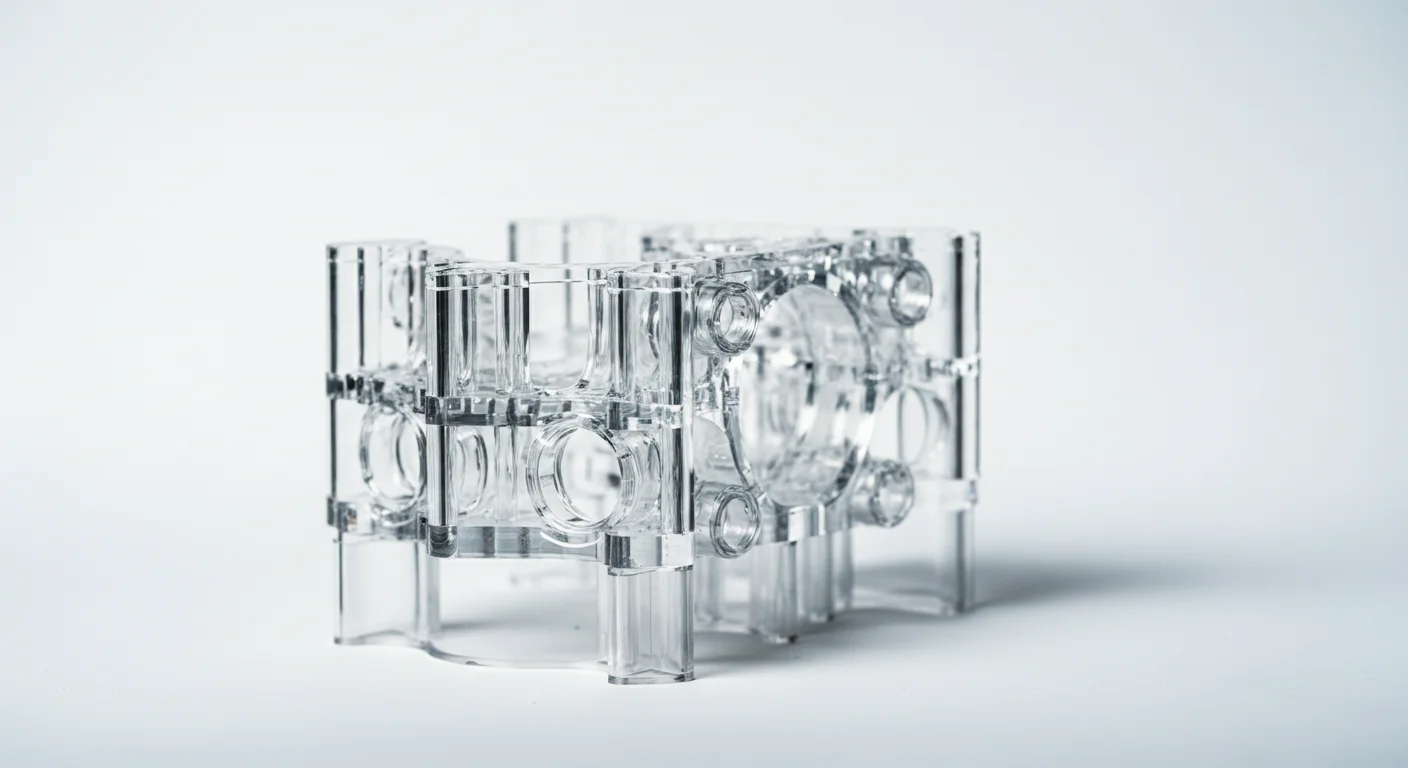
Polycarbonate 3D Printing: Strong, Heat-Resistant and Transparent
Polycarbonate is one of the strongest 3D printing materials: heat-resistant up to 110°C, impact-tough, and optionally transparent. Discover when PC is the right choice.
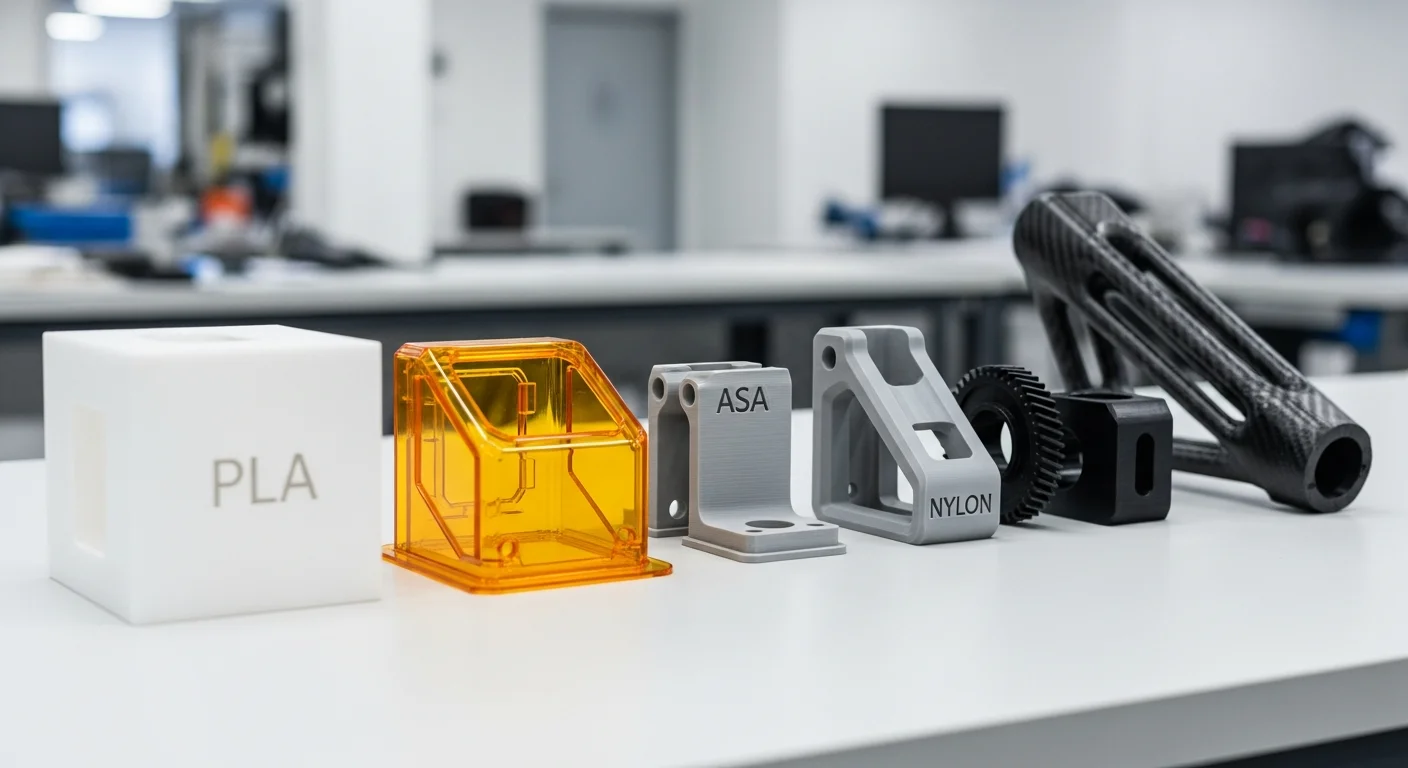
3D Printing Material Selection: A Practical Guide for Business Applications
Choosing the right 3D printing material for your business project. PLA, PETG, ASA, Nylon and more - when to use each material and why it matters for functional parts.
3D Printing Costs Explained: What Determines the Price of Your Print?
What does 3D printing actually cost? Discover which factors determine the price: material, print time, complexity, post-processing, and more. With practical examples.
Need help with your project?
Contact us for custom 3D prints or B2B services.