3D Printing for MRO: Reduce Downtime and Cut Maintenance Costs
How businesses use 3D printing for maintenance, repair, and operations. Reduce equipment downtime, print replacement parts on demand, and lower MRO costs.
Dennis
3Dennis
Contents
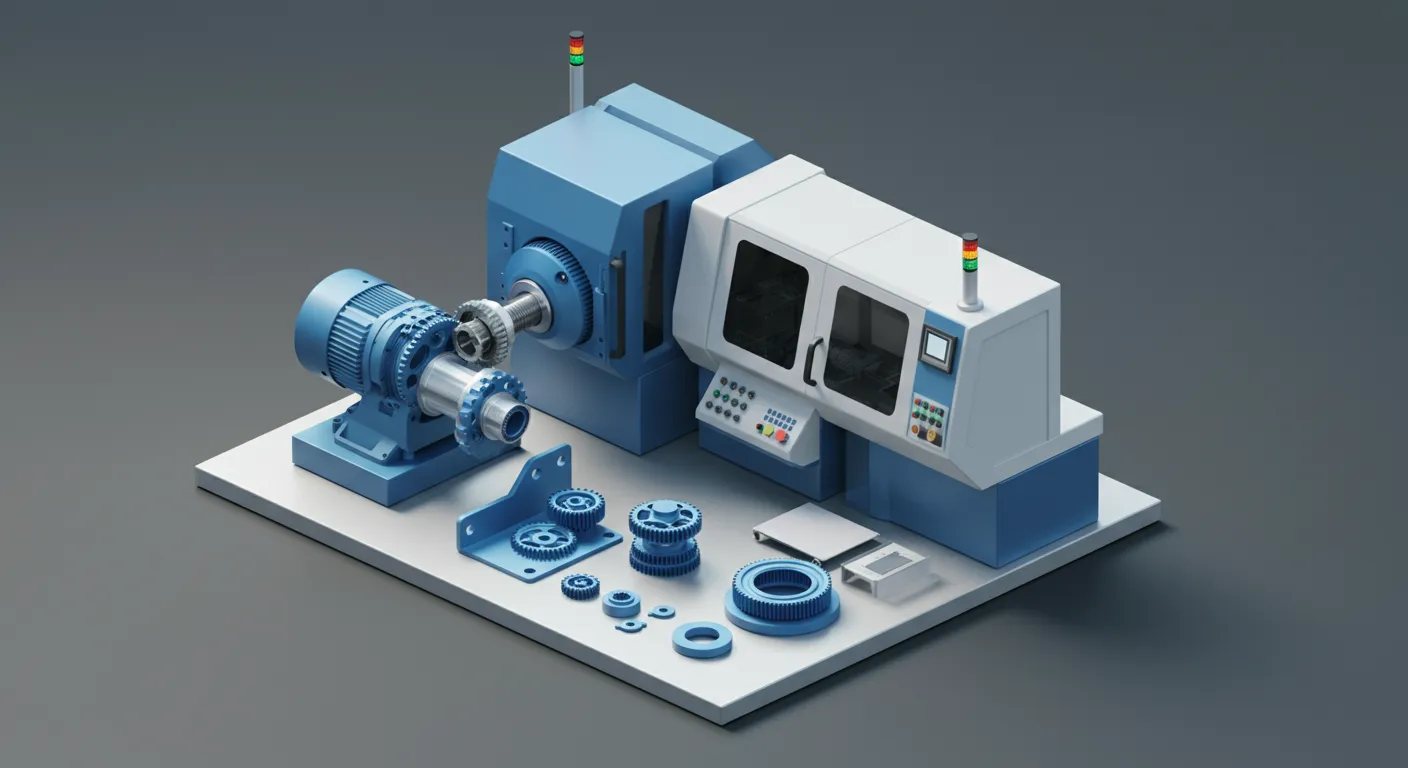
A production line grinds to a halt because a small plastic bracket snapped. The part is proprietary, the manufacturer quotes six weeks for delivery, and every hour of downtime costs thousands. This scenario plays out in factories, warehouses, and facilities across Europe every single day. Maintenance, Repair, and Operations (MRO) is one of the largest hidden cost centers in any business, and traditional approaches to sourcing replacement parts are painfully slow.
3D printing is changing this equation. Instead of waiting weeks for a replacement part to arrive from the other side of the world, companies are now printing functional parts in hours. The result? Less downtime, lower costs, and a maintenance team that can actually solve problems on the spot.
What Is MRO and Why Does It Matter?
Maintenance, Repair, and Operations covers everything a business needs to keep its equipment and facilities running. From replacing worn-out conveyor guides to fabricating custom tool holders, MRO encompasses thousands of small but critical tasks. For most manufacturing companies, MRO accounts for a significant portion of operational expenses, often 5-10% of total production costs.
The real pain point isn’t the cost of the parts themselves. It’s the downtime. When a machine sits idle because a €15 component isn’t available, the losses can run into tens of thousands of euros per day. Traditional procurement cycles, with their minimum order quantities, long lead times, and shipping delays, simply weren’t designed for urgent repairs. This is where on-demand 3D printing becomes a game-changer.
Printing Replacement Parts On Demand
The most immediate application of 3D printing in MRO is producing replacement parts when and where they’re needed. Instead of maintaining massive inventories of spare parts (many of which may never be used), companies can store parts as digital files and print them on demand.
Consider a food processing plant where a custom guide rail on a packaging machine cracks. Traditionally, the maintenance team would need to identify the part number, contact the OEM, wait for a quote, place an order, and then wait for delivery. With 3D printing, the process looks very different. The team scans or measures the broken part, creates a digital model, and prints a functional replacement the same day.
This approach is particularly valuable for older equipment where original spare parts are no longer manufactured. Many businesses keep aging machines running because they still perform well, but sourcing replacement parts becomes increasingly difficult over time. 3D printing eliminates this problem entirely by allowing you to produce spare parts on demand, regardless of whether the original manufacturer still exists.
Reducing Downtime from Weeks to Hours
The speed advantage of 3D printing for MRO cannot be overstated. Where traditional procurement might take weeks or even months, a 3D printed part can often be ready within 24 hours. For critical equipment failures, this difference can save a business enormous amounts of money.
A practical example: a logistics company operates a fleet of automated sorting machines. When a custom plastic finger on one of the sorting mechanisms breaks, the entire lane goes offline. The OEM replacement requires a minimum order of 100 pieces and ships in four weeks. With 3D printing, the maintenance team can have a replacement part printed and installed before the next shift starts.
This kind of responsiveness transforms how maintenance departments operate. Instead of stockpiling parts and hoping they have what they need, teams become agile problem-solvers. They can respond to equipment failures in real time, keeping production running and customers satisfied. The same principle applies to custom enclosures that protect sensitive equipment, which can be designed and produced in-house without lengthy procurement cycles.
Beyond Replacement: Improving Existing Parts
One of the most underappreciated benefits of 3D printing for MRO is the ability to improve parts, not just replace them. When a component fails repeatedly, it’s a signal that the original design has a weakness. With 3D printing, maintenance engineers can redesign the part to address that weakness, making it stronger, more durable, or better suited to the actual operating conditions.
For instance, a metal bracket that keeps bending under load can be redesigned in a reinforced polymer with better geometry. A plastic cover that cracks from vibration can be reprinted in a more flexible material like TPU. These iterative improvements compound over time, gradually making equipment more reliable and reducing the frequency of repairs.
This design freedom also extends to creating entirely new solutions for recurring problems. If a machine produces excessive dust that clogs sensors, a 3D printed custom dust shield can be designed and tested within days. If operators struggle to access a maintenance point, a custom adapter or extension tool can be fabricated. The possibilities are limited only by creativity.
Materials That Match Industrial Demands
A common concern about 3D printed MRO parts is whether they can withstand real industrial conditions. The answer is yes, provided you choose the right material. Modern 3D printing materials have come a long way from the brittle plastics of a decade ago.
PETG offers excellent chemical resistance and durability, making it ideal for parts exposed to cleaning agents or mild chemicals. Nylon provides outstanding wear resistance for moving components like gears and bushings. For outdoor or high-temperature applications, PETG and similar engineering plastics deliver reliable performance in demanding environments. Carbon fiber reinforced filaments add stiffness and strength for structural applications.
The key is matching the material to the application. A maintenance bracket doesn’t need the same properties as a high-speed bearing. By understanding the actual loads, temperatures, and chemical exposures a part will face, 3D printing can deliver components that meet or exceed the performance of traditionally manufactured alternatives.
Building a Digital Parts Library
Smart companies are building digital parts libraries, essentially a catalog of 3D models for every custom or hard-to-source component in their facility. When a part breaks, the maintenance team simply selects the model from the library, sends it to the printer, and has a replacement ready in hours.
This approach eliminates the need for physical spare parts inventories, freeing up warehouse space and reducing the capital tied up in stock. It also solves the knowledge problem. When an experienced maintenance technician retires, their knowledge of custom fixes and workarounds can be captured in digital models rather than lost forever.
Building this library takes time, but the payoff is substantial. Each time a new part is modeled and printed, it adds to a growing database that makes the entire operation more resilient. Over time, the most critical and frequently replaced parts are all available at the click of a button.
The Financial Case for 3D Printed MRO
The return on investment for 3D printing in MRO is often surprisingly quick. Consider the costs of a single significant equipment failure: lost production, expedited shipping for emergency parts, overtime labor for repairs, and potential penalties for late deliveries. A single avoided downtime event can justify the investment in 3D printing capability.
Beyond emergency repairs, 3D printing reduces everyday MRO costs by eliminating minimum order quantities, reducing shipping expenses, and cutting the labor hours spent on procurement. Maintenance teams spend less time searching for parts and more time actually maintaining equipment. For companies looking to understand the full financial impact, our analysis of B2B 3D printing cost savings provides a detailed breakdown.
The operational benefits extend beyond direct cost savings. Faster repairs mean higher equipment uptime, which translates to more output from existing assets. This improved utilization can delay or eliminate the need for capital expenditure on new equipment, delivering financial benefits that ripple across the entire organization.
Getting Started with MRO 3D Printing
You don’t need to transform your entire maintenance operation overnight. The most effective approach is to start with a few high-impact use cases, parts that fail frequently, take a long time to source, or cause significant downtime when unavailable.
Identify those pain points, measure the current cost of downtime and procurement, and then pilot 3D printing as an alternative. The results typically speak for themselves. Once your maintenance team sees how quickly they can solve problems with 3D printing, adoption accelerates naturally.
At 3Dennis, we help businesses implement 3D printing for their MRO needs. Whether you need a single replacement part printed urgently or want to build a comprehensive digital parts library, our team has the expertise to deliver. Explore our services to see how we can help, or get in touch to discuss your specific maintenance challenges.
Keep reading
Nylon 3D Printing: The Ideal Choice for Technical Parts
Why nylon (PA12/PA6) is the go-to material for technical 3D printing applications. Strong, flexible, wear-resistant - discover when nylon is the right choice.
Flexible 3D Printing with TPU: When Rubber Beats Plastic
Discover when flexible TPU prints are the right choice. From vibration dampeners to seals and protective covers: everything businesses and makers need to know about flexible 3D printing.
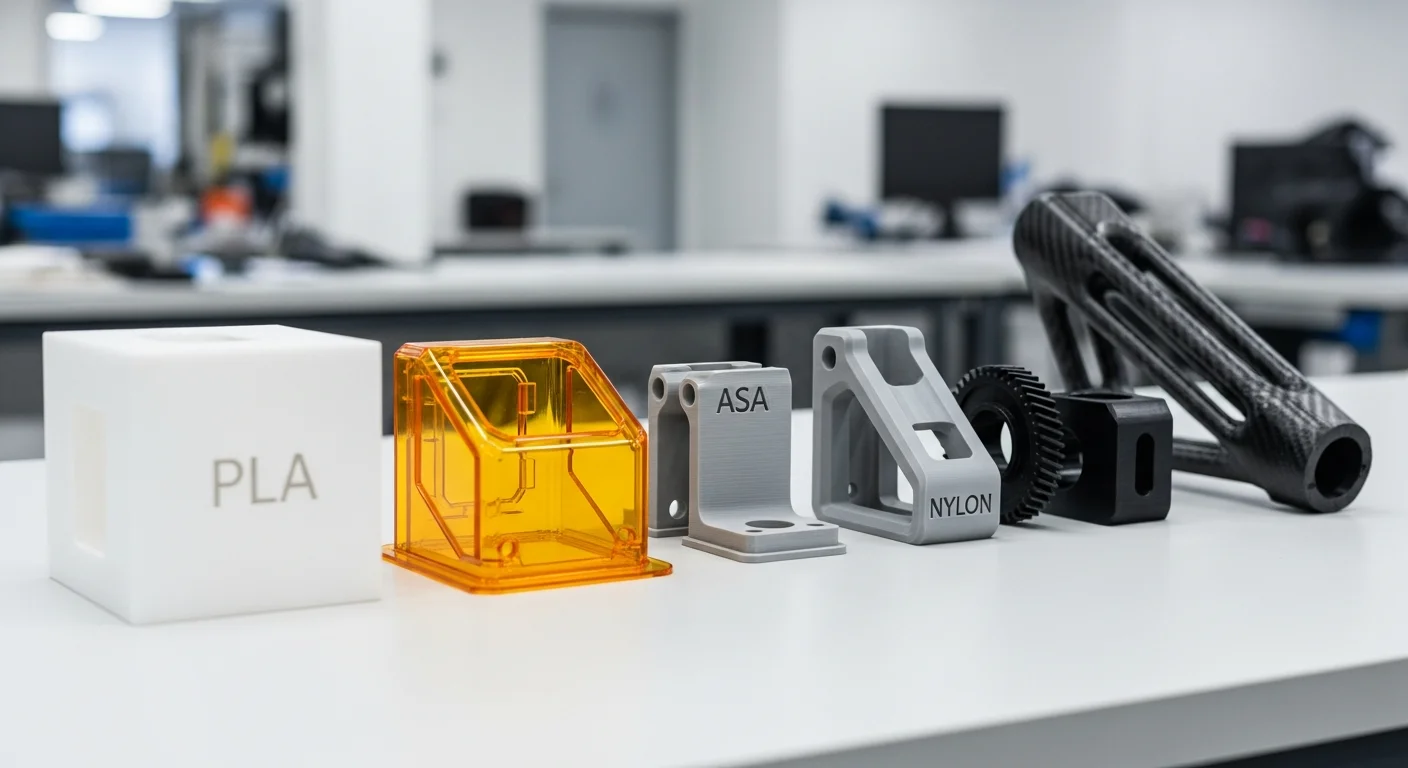
3D Printing Material Selection: A Practical Guide for Business Applications
Choosing the right 3D printing material for your business project. PLA, PETG, ASA, Nylon and more - when to use each material and why it matters for functional parts.
Need help with your project?
Contact us for custom 3D prints or B2B services.