On-Demand Manufacturing: How 3D Printing Eliminates Excess Inventory
Learn how businesses use on-demand 3D printing to cut inventory costs, reduce waste, and build resilient supply chains. A practical guide for B2B.
Dennis
3Dennis
Contents
The Hidden Cost of “Just in Case” Inventory
Every warehouse shelf filled with parts that might be needed represents capital that isn’t working for your business. For many manufacturers and service companies, inventory costs go far beyond the price of the parts themselves. There’s warehousing, insurance, depreciation, obsolescence, and the administrative burden of tracking thousands of SKUs. Studies consistently show that carrying costs add 20–30% annually on top of the original purchase price.
Yet businesses keep ordering in bulk because traditional manufacturing demands it. Injection molds require minimum order quantities of thousands. CNC machining setups make small batches prohibitively expensive per unit. So procurement managers order more than they need, hoping demand forecasts prove accurate — and too often, they don’t.
This is where on-demand 3D printing fundamentally changes the equation.
From Forecast-Driven to Demand-Driven
The core advantage of 3D printing for inventory management isn’t about the technology itself — it’s about removing the economic penalty for producing small quantities. When there’s no tooling cost, no mold to amortize, and minimal setup time, manufacturing one part costs roughly the same per unit as manufacturing fifty.
That shift allows businesses to move from a forecast-driven model (“order 500 now because we think we’ll need them over the next year”) to a demand-driven model (“print 20 this week because that’s what we actually need”). The result is less capital tied up in stock, less waste from obsolete parts, and more flexibility to adapt when designs change or demand shifts.
Consider a mid-sized equipment manufacturer that uses dozens of custom brackets, housings, and adapters across their product line. Traditionally, each of those parts requires a separate order, often with minimum quantities and lead times of 4–8 weeks. With on-demand 3D printing, those same parts can be produced in days, in exactly the quantities needed.
Real Benefits Beyond Cost Savings
The financial case for reducing inventory is compelling, but the operational benefits run deeper.
Design freedom without penalty. When you’re not locked into expensive tooling, updating a part design doesn’t mean scrapping a warehouse full of outdated components. Engineers can iterate freely, knowing that the next batch will simply use the updated file. This is particularly valuable for companies that improve their products continuously rather than in large generational leaps.
Supply chain resilience. The disruptions of recent years taught businesses a painful lesson about relying on long, fragile supply chains. On-demand 3D printing brings production closer to the point of use. Whether you’re sourcing from a local printing partner like 3Dennis or building an internal capability, the dependency on overseas suppliers and shipping timelines shrinks dramatically.
Simplified logistics. Fewer SKUs in your warehouse means less complexity in your ERP system, fewer purchase orders to manage, and less time spent on inventory counts. For operations managers, this simplification can free up significant resources.
Which Parts Are Good Candidates?
Not every part in your inventory is suitable for on-demand 3D printing — at least not yet. The best candidates typically share a few characteristics:
- Low-to-medium volume parts where minimum order quantities force you to over-purchase
- Parts with high obsolescence risk, such as components for products still in development or nearing end-of-life
- Custom or configurable parts where you maintain multiple variants that each see low individual demand
- Non-structural components like housings, covers, brackets, cable guides, and organizational elements
Materials like PETG, ASA, and nylon handle most industrial environments well, offering good chemical resistance, UV stability, and mechanical strength. For parts that need higher performance, carbon fiber–reinforced filaments and engineering-grade resins are expanding what’s possible every year.
Building a Digital Inventory
One of the most powerful concepts in on-demand manufacturing is the shift from physical inventory to digital inventory. Instead of shelves full of parts, you maintain a library of print-ready 3D files. When a part is needed, it gets produced. When a design improves, you update the file — no scrapping required.
This approach is especially valuable for spare parts management. Businesses that support older equipment often face the choice between maintaining expensive inventories of rarely-needed spares or telling customers that parts are no longer available. A digital inventory eliminates that trade-off entirely. The files are stored indefinitely at virtually no cost, and parts are printed only when actually requested.
At 3Dennis, we help businesses build and manage these digital part libraries. We handle everything from initial 3D scanning or CAD modelling of existing parts to optimizing designs for printing and maintaining a production-ready file archive.
Getting Started Without Disruption
Transitioning to on-demand manufacturing doesn’t require a radical overhaul of your operations. The most successful approach is to start with a focused pilot: identify a category of parts where inventory costs are clearly excessive, where lead times from current suppliers are frustratingly long, or where design changes happen frequently.
Run those parts through an on-demand workflow for three to six months. Track the actual costs — not just per-unit pricing, but total cost of ownership including storage, waste, and procurement time. In our experience, businesses are often surprised by how quickly the numbers favour on-demand production, even when per-unit printing costs are slightly higher than bulk traditional methods.
From there, expanding is straightforward. Each new part category you move to on-demand production further reduces your inventory burden and increases your operational agility.
The Competitive Edge
In a business environment where agility and capital efficiency matter more than ever, the companies that figure out how to produce what they need, when they need it, without maintaining mountains of safety stock, have a genuine competitive advantage. On-demand 3D printing isn’t a futuristic concept — it’s a practical tool that businesses across Europe are using right now to cut costs, reduce waste, and respond faster to their markets.
Ready to explore what on-demand manufacturing could look like for your business? Take a look at our services to see how we work, or get in touch to discuss your specific situation. We’re happy to review your current parts and identify where on-demand production makes the most sense.
Keep reading
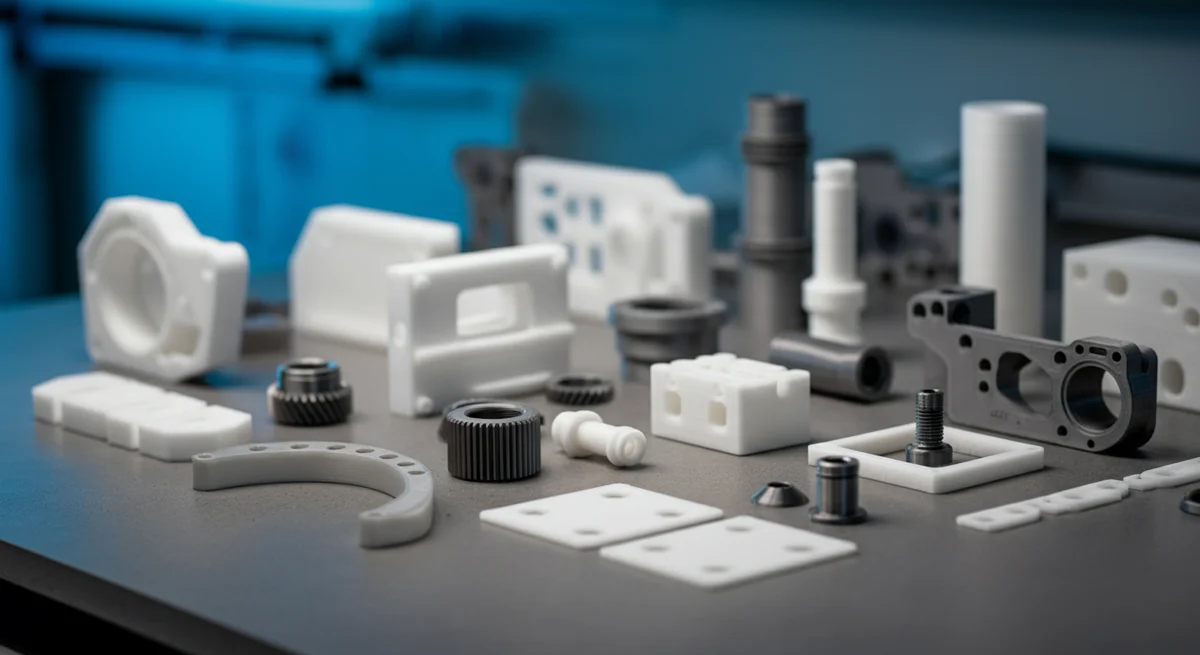
3D Printed Spare Parts On Demand: Cut Inventory Costs
Discover how on-demand 3D printed spare parts reduce warehouse costs, minimize downtime, and streamline your supply chain. A practical guide for businesses.

Supply Chain Resilience: How 3D Printing Protects Your Business
Discover how 3D printing builds supply chain resilience for businesses. Reduce dependency on overseas suppliers, cut lead times, and keep production running.
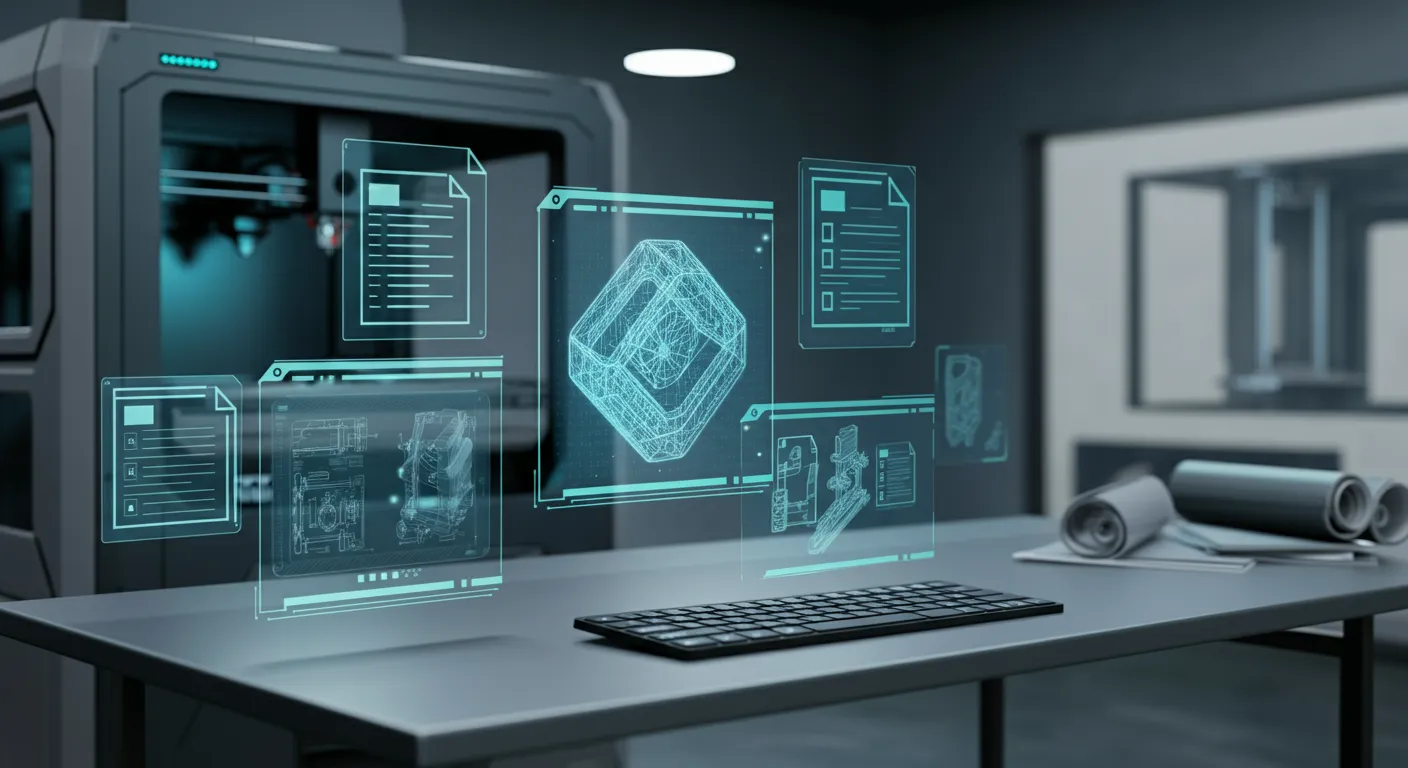
Digital Inventory: How 3D Printing Eliminates the Need for Physical Stock
Discover how businesses replace costly physical warehouses with digital 3D print files. Print parts on demand and cut storage costs dramatically.
Need help with your project?
Contact us for custom 3D prints or B2B services.