Is 3D Printed Plastic Food Safe? What You Need to Know
Can you use 3D printed parts around food? Learn why layer lines, additives and heat matter, which uses are fine and when to ask us for advice.
Dennis
3Dennis

Contents
A customer asks us a version of this question almost every month: “Can I 3D print a cookie cutter, a scoop or a part for my food machine, and is it food safe?” The honest answer is that it depends on the material, the printer, the surface and how the part is used. The filament spool may say “food safe” while the finished part is not.
In this article we explain what actually decides food safety for a 3D print, which uses are reasonable, and where you should choose another route.
Why “food safe filament” is not the whole story
Food contact materials in the EU have to follow Regulation (EC) 1935/2004, and for plastics also Regulation (EU) 10/2011. In short: the material may not release substances into food in amounts that harm health or change the taste or smell. Plastics such as PLA and PETG are often made from raw materials that are allowed in food packaging, and that is what the “food safe” label on a spool usually refers to.
But a spool is not a finished product. Colour pigments, flow additives and fillers are added to filament, and not all of them are tested for food contact. Carbon fibre, glitter, wood and metal-filled filaments are a clear no. The printer also plays a part: many nozzles are made of brass, which can contain a small amount of lead, and traces of other materials from earlier prints can end up in your part.
So a certificate for the raw material does not make the printed part compliant. The manufacturer of the final product, which is the one who puts it into use with food, remains responsible for showing that it is safe.
The real problem: layer lines
Even with a perfect material, a standard FDM print has a structural issue. The part is built from layers, and between and inside those layers are tiny grooves and sometimes small gaps. Food residue and moisture settle in there, and bacteria can grow where a sponge or brush cannot reach.
That is why a 3D printed part is hard to clean properly. Washing by hand removes what you can see, but not what sits in the grooves. For single use or short contact with dry food this is rarely a problem. For parts that touch raw meat, dairy, dough or anything wet for a long time, it is a real hygiene risk.
Heat adds a second problem. PLA starts to soften at roughly 55 to 60 degrees, so a dishwasher or a pot of hot water can warp it, and warping opens more gaps. PETG handles heat better, but is still no replacement for stainless steel. Our article on PLA versus PETG compares the two materials in more detail.
Uses that are generally fine, and uses that are not
Most practical questions come down to how the part touches the food. Some examples from what we see:
- Cookie cutters and clay-style stamps for occasional use, rinsed and dried straight after.
- Dry food only: a scoop for coffee beans, a holder for a spice jar, a stand for a cutting board.
- Parts that never touch food: brackets, covers, jigs, handles and housings on or around food machines.
The last category is where 3D printing shines in the food industry, and it is also the safest. A custom jig, fixture or tool on the production line, or a bracket for a sensor, can be printed in days instead of weeks without any food contact question at all.
Things we would advise against: baby bottles, teething items, drinking cups, straws, cutlery, and anything used with raw meat, dairy or hot liquids. For these, an injection moulded or machined part in a certified material is the right choice.
Can you make a print safer?
There are ways to improve the situation, but none of them turn a print into a certified product. A coating of food-grade epoxy resin, applied by someone who follows the curing instructions exactly, can seal the surface and fill the layer lines. Careful post-processing such as sanding followed by a proper sealant makes the surface smoother and easier to clean.
Printing with a stainless steel nozzle, a thicker line width and a lower layer height also reduces the number of grooves. Our guide to layer height, quality and speed explains that trade-off. Still, a coating wears off with use, and once it chips, the layer lines are exposed again.
For commercial use, such as a part that goes into a machine that processes food or a product that you sell to consumers, you need more than good intentions. You need materials with a declaration of compliance, a documented process and often migration testing by a laboratory. We cannot certify a part as food safe, but we can help you choose the right material and set-up, and tell you honestly when another technology fits better.
Choosing the right approach
Start with the question: does this part touch food, for how long, and what kind? If the answer is “never”, you can use any suitable material. If the answer is “briefly and dry”, a carefully printed and sealed part may be acceptable for private use. If the answer is “regularly, wet or hot, or by a customer”, plan for a certified material or a different production method.
Our material selection guide helps you compare the options, and for tough, wear-resistant parts around machines nylon is often a better fit than a brittle plastic.
Ask us before you print
Not sure whether your idea is a good fit? Tell us what the part is for, what it touches and how it is cleaned. Send your question or file through our contact form and we come back with honest advice on material, finish and the right approach. You can also see what we offer on our services page.
Keep reading
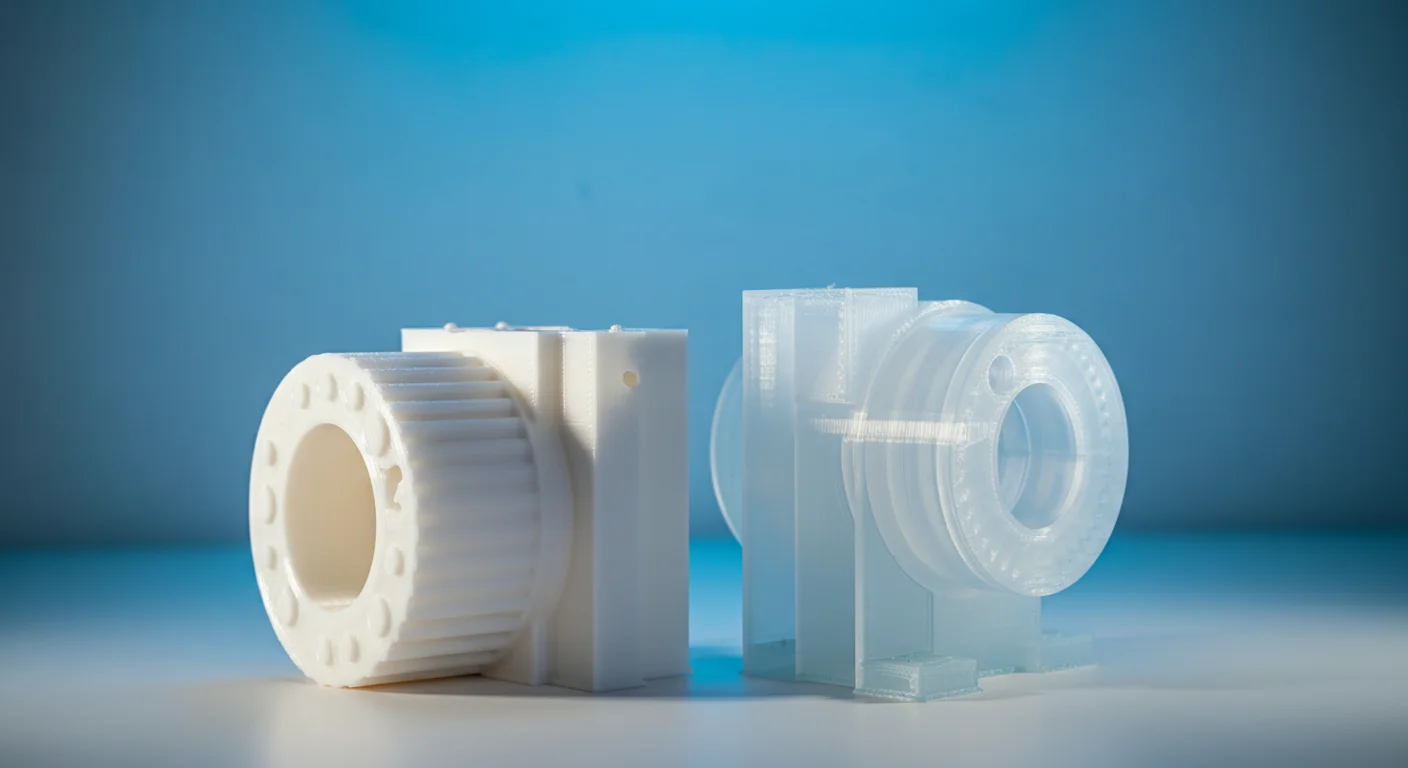
PLA vs PETG: Which Material Should You Choose for Your 3D Print?
PLA or PETG for your 3D print project? Discover the differences in strength, temperature resistance, printability and cost. A practical comparison for hobbyists and businesses alike.
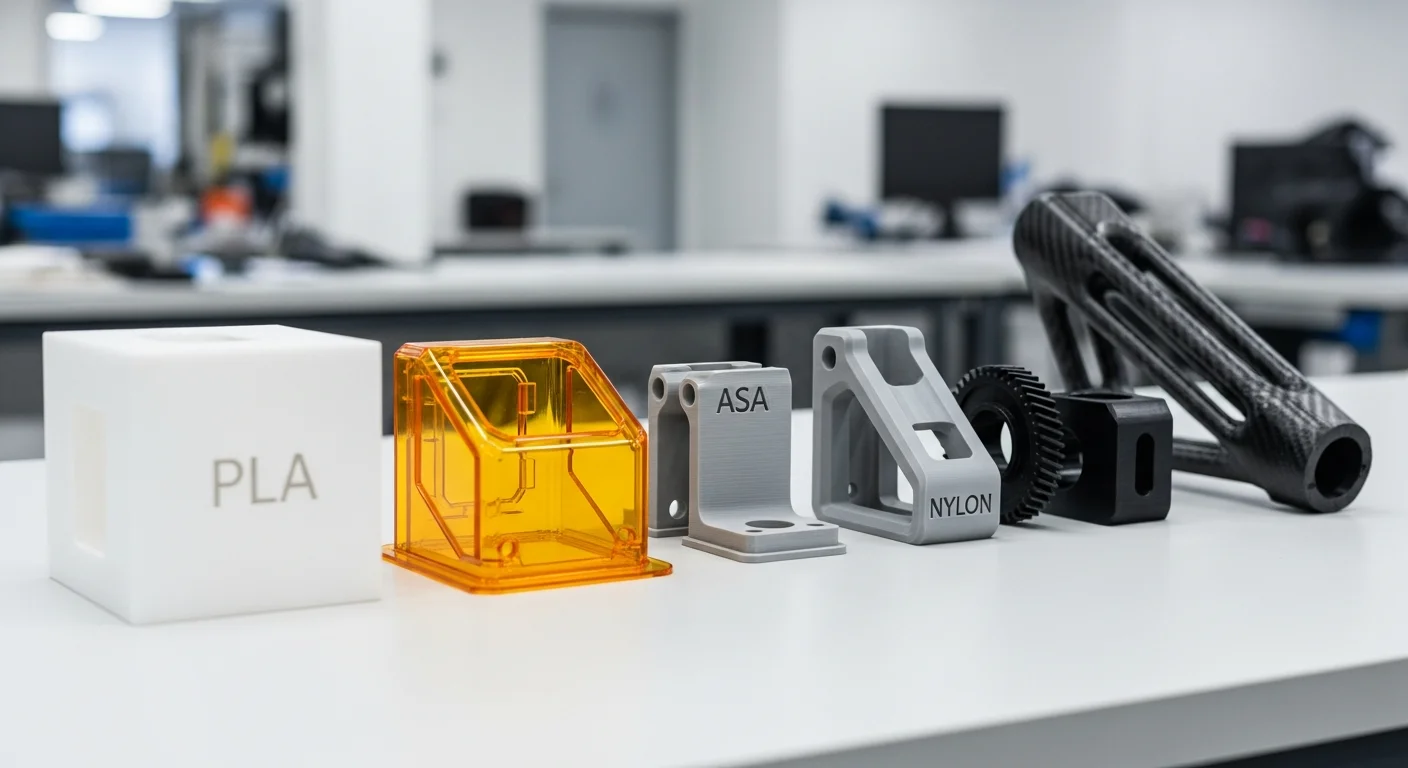
3D Printing Material Selection: A Practical Guide for Business Applications
Choosing the right 3D printing material for your business project. PLA, PETG, ASA, Nylon and more - when to use each material and why it matters for functional parts.

PETG for Outdoor Use: Everything You Need to Know
Is PETG suitable for outdoor applications? Learn about UV resistance, weatherproofing, and why PETG is our go-to material for outdoor 3D printed parts.
Need help with your project?
Contact us for custom 3D prints or B2B services.