Digital Inventory: How 3D Printing Eliminates the Need for Physical Stock
Discover how businesses replace costly physical warehouses with digital 3D print files. Print parts on demand and cut storage costs dramatically.
Dennis
3Dennis
Contents
Every business that relies on physical parts knows the pain of inventory management. You order too many, and they sit on shelves collecting dust. You order too few, and production grinds to a halt while you wait for a new shipment. Either way, it costs money you would rather spend elsewhere.
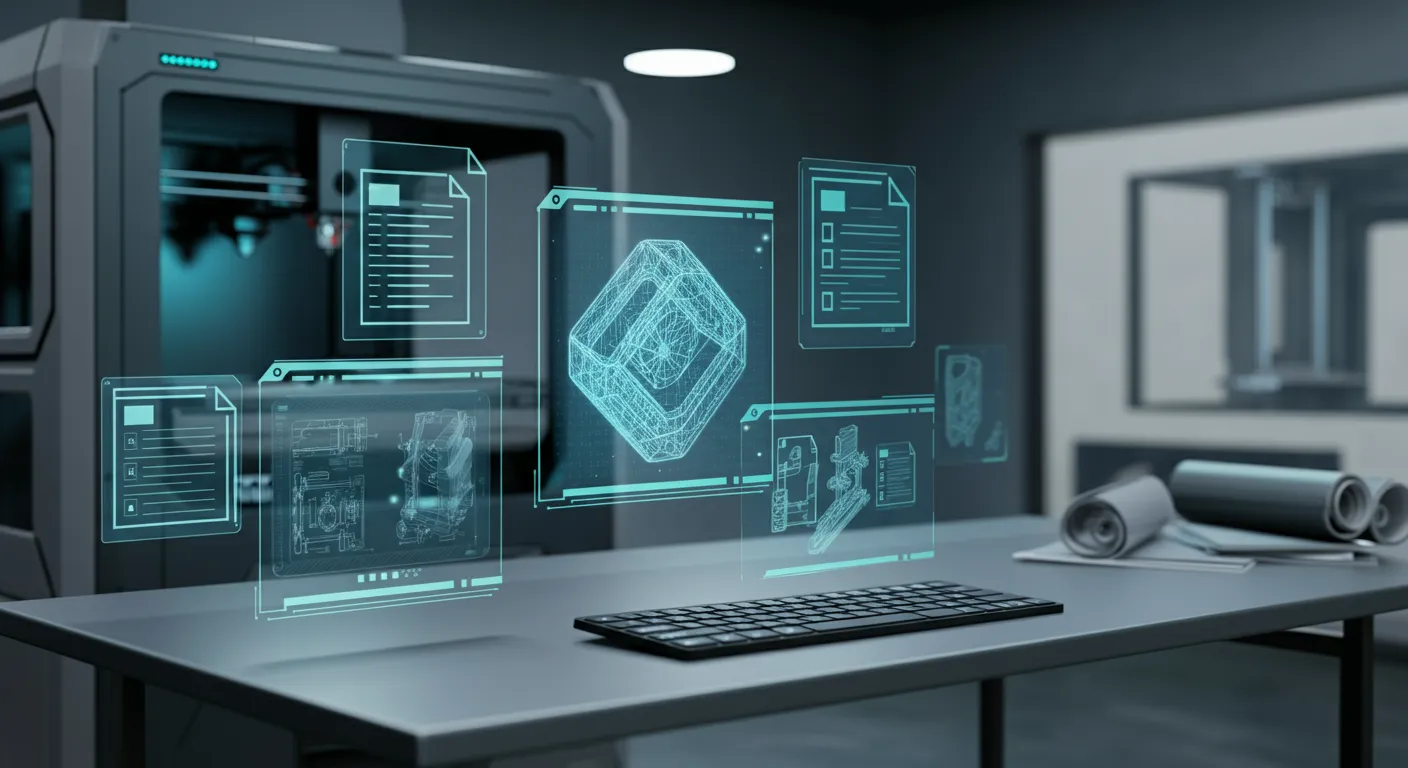
But what if you could store thousands of parts without a single shelf? That is exactly what digital inventory makes possible. Instead of warehousing physical components, you maintain a library of 3D print files that can be produced on demand, exactly when and where you need them.
What Is Digital Inventory?
Traditional inventory management means forecasting demand, ordering in bulk, and maintaining warehouse space for parts that may not be needed for months. Digital inventory flips this model entirely. Every part exists as a validated, print-ready CAD file stored in the cloud or on a local server.
When a part is needed, it gets printed. No minimum order quantities, no shipping delays from overseas suppliers, no obsolete stock gathering dust. The part goes from digital file to physical object in hours rather than weeks. This approach is gaining serious traction across industries, with recent surveys showing that 97% of manufacturing stakeholders now use 3D printing for functional prototypes or end-use parts.
For businesses that maintain large catalogs of spare parts or custom components, this shift can be transformative. Think about a company that stocks hundreds of different brackets, housings, or connectors. Converting even a fraction of those to digital inventory frees up significant warehouse space and capital.
The Real Cost of Physical Warehousing
Most businesses underestimate what physical inventory actually costs. The purchase price of the parts themselves is just the beginning. You also pay for warehouse rent, climate control, insurance, inventory tracking systems, and the staff to manage it all. Industry estimates suggest that carrying costs typically add 20-30% on top of the actual part value per year.
Then there is the hidden cost of obsolescence. Products get updated, designs change, and suddenly you are sitting on a pile of parts that no longer fit anything. With digital inventory, updating a part means editing a file, not scrapping a warehouse full of outdated components.
Consider a facilities management company that maintains equipment across dozens of buildings. Instead of stocking replacement brackets, covers, and mounting hardware for every possible device, they keep a digital library. When something breaks, the exact part gets printed and delivered the same day. No more emergency orders, no more “we don’t stock that anymore” from suppliers.
If you are already exploring how on-demand manufacturing can reduce your inventory costs, digital inventory is the natural next step in that journey.
How to Build a Digital Parts Library
Transitioning to digital inventory does not happen overnight, and it should not. The smartest approach is to start with the parts that cause the most headaches in your current supply chain.
Begin by identifying components that are frequently out of stock, have long lead times, or come with high minimum order quantities. These are your best candidates for digitization. Work with a 3D printing partner to reverse-engineer existing parts or optimize designs specifically for additive manufacturing.
Each file in your digital library should include more than just the 3D model. Document the material specifications, print settings, quality requirements, and any post-processing steps. This ensures consistent results every time a part is produced, regardless of who presses the print button.
Validation is critical. Every digitized part needs to be tested against the original specifications before it enters your production library. Once validated, that file becomes a permanent asset that can be printed hundreds of times with identical results. As we have discussed in our guide on designing for 3D printing, proper design optimization ensures your parts perform exactly as intended.
Industries Already Making the Switch
Digital inventory is not a theoretical concept reserved for tech giants. Businesses across multiple sectors are already benefiting from this approach.
In manufacturing, companies use digital inventories to maintain tooling, jigs, and fixtures without dedicating floor space to rarely used items. When a specific tool is needed for a production run, it gets printed the morning of. Between runs, it exists only as a file.
The maintenance and repair sector has been an early adopter as well. Equipment manufacturers that previously had to stock thousands of spare parts for legacy products can now offer indefinite parts availability through digital files. A machine from 2010 that needs a new housing cover? Print it from the original file, even if the physical mold was destroyed years ago. Our overview of 3D printing for MRO operations covers this application in more detail.
Healthcare, automotive, and aerospace companies are following suit, particularly for low-volume parts where traditional manufacturing setups are prohibitively expensive for small batches.
Getting Started with Your Business
The transition to digital inventory works best as a phased approach. Start small, prove the concept with a handful of parts, then expand as you gain confidence in the process and the results.
Phase one is identifying your highest-impact parts, the ones that are expensive to stock, slow to source, or frequently updated. Phase two involves working with a 3D printing partner to digitize and validate those designs. Phase three is scaling the library and integrating it into your procurement workflows.
The financial case usually speaks for itself after the first few parts. When you eliminate minimum order quantities, reduce warehouse needs, and cut lead times from weeks to hours, the savings compound quickly.
Ready to Digitize Your Inventory?
At 3Dennis, we help businesses build and manage digital parts libraries tailored to their specific needs. From reverse engineering existing components to optimizing designs for 3D printing, we handle the technical side so you can focus on running your business.
Curious what digital inventory could look like for your company? Explore our services or get in touch to discuss your specific situation. We will help you identify the best candidates for digitization and show you exactly how much you could save.
Keep reading
Outsourcing 3D Printing vs In-House: What's Best for Your Business?
Should your business invest in 3D printers or outsource to a print service? Compare costs, speed, and flexibility to make the right decision.
Supply Chain Resilience: How 3D Printing Protects Your Business
Discover how 3D printing builds supply chain resilience for businesses. Reduce dependency on overseas suppliers, cut lead times, and keep production running.
B2B 3D Printing: How Businesses Save Time and Money with Custom Parts
Discover how businesses save costs with 3D printed parts. From prototypes to production runs - the business benefits of 3D printing explained.
Need help with your project?
Contact us for custom 3D prints or B2B services.