Bridge Manufacturing with 3D Printing: Low-Volume Production While You Wait for Tooling
Discover how 3D printing enables bridge manufacturing for B2B companies: produce functional parts in small batches while injection mold tooling is being built, eliminating months of delay.
Dennis
3Dennis
Contents
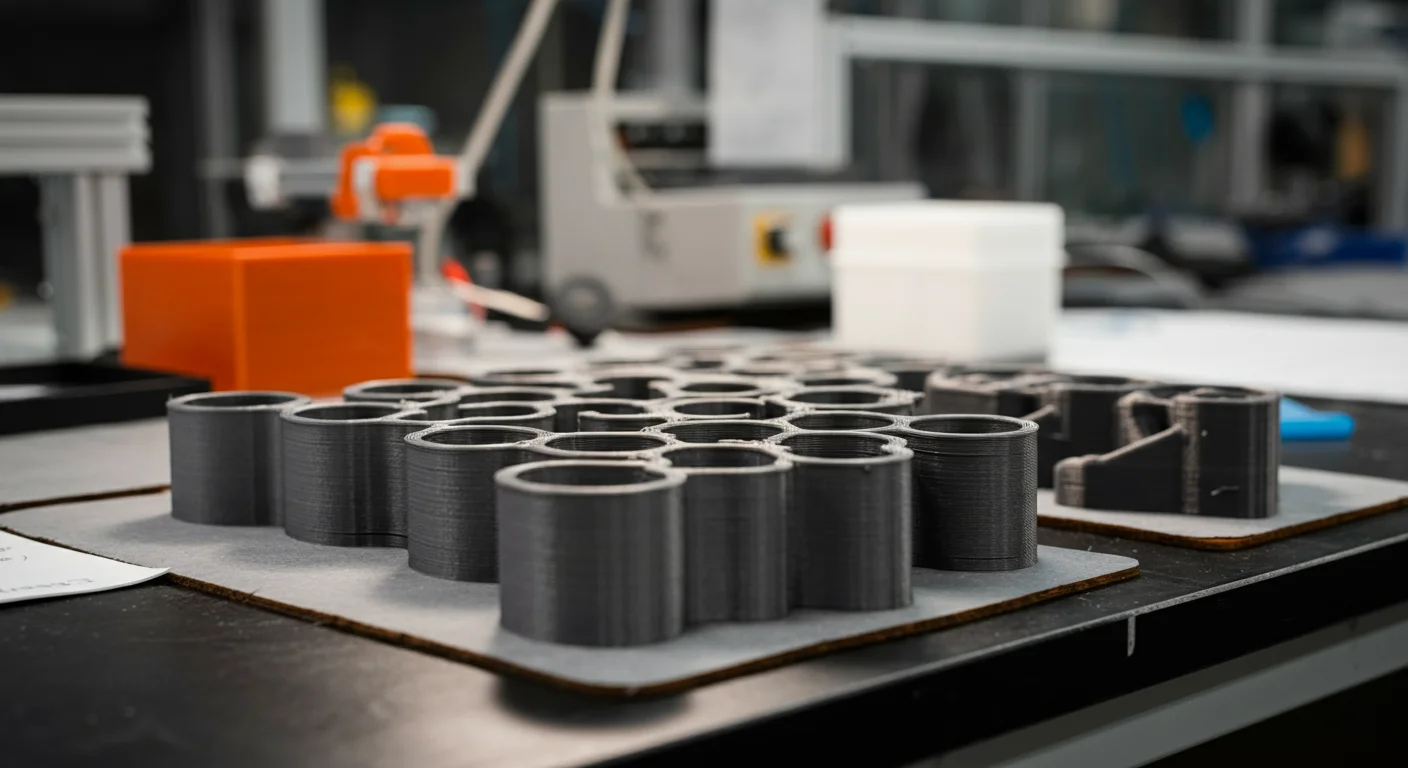
Bridge manufacturing is one of the most overlooked applications of 3D printing in a business context. When a company needs to launch a new product or replacement component but injection mold tooling will not be ready for another three to six months, the traditional options are painful: delay the launch, overpay for short-run machining, or accept a long gap in production capacity.
3D printing changes that calculation entirely.
What Is Bridge Manufacturing?
Bridge manufacturing refers to producing a limited quantity of functional parts, typically between 20 and 500 units, using an interim production method while the long-term manufacturing solution is still being set up. The “bridge” is the gap between a validated prototype and full-scale production.
In practice, this means a company can start shipping product, supplying assembly lines, or fulfilling initial customer orders using 3D printed parts while the injection mold is still being machined or the die-cast tooling is being qualified.
This is not about prototyping. These are real, functional, end-use parts.
Why Injection Molding Creates a Bottleneck
Injection mold tooling typically takes 8 to 16 weeks to design and manufacture. For complex geometries, that timeline can stretch further. The cost of a mold ranges from a few thousand euros for a simple tool to tens of thousands for a multi-cavity production mold.
That investment makes sense at high volumes. At 10,000 units per year, the per-part cost of injection molding is very competitive. But before you reach that volume, the capital expenditure is a significant risk, and the wait time can cost you real market opportunities.
Meanwhile, your product development team has already validated the design. The drawings are signed off. You are ready to produce. The only thing holding you back is a mold that does not exist yet.
3D Printing as the Bridge
For many types of parts, modern FDM (Fused Deposition Modeling) and resin-based 3D printing can produce functional components that are strong enough, dimensionally accurate enough, and visually acceptable enough for real-world use during this transitional period.
Materials like PETG, ASA, and nylon offer a combination of mechanical strength, temperature resistance, and chemical resistance that makes them suitable for many industrial applications. For parts used in customer-facing products, post-processing options such as sanding and painting can bring the surface finish up to production standards.
The advantage over other bridge manufacturing methods, such as urethane casting or soft tooling, is that 3D printing has almost no setup time. You upload a file and the machine starts. There are no molds to prepare, no tooling to adjust, and no minimum order quantities to meet.
For a deeper look at what functional end-use parts look like in 3D printing, see our post on end-use production parts.
When Does Bridge Manufacturing Make Sense?
Bridge manufacturing with 3D printing is the right choice when:
- Your tooling lead time is 8 weeks or longer
- You need between 10 and 500 units before tooling is ready
- The parts do not require surface finishes that 3D printing cannot achieve
- The mechanical requirements fall within the range of engineering-grade plastics
- Time to market has significant commercial value for your business
It is less appropriate when parts require tight tolerances in the sub-0.1mm range, when materials need to meet specific regulatory certifications that 3D printed materials cannot satisfy, or when the geometry was specifically designed around the constraints of injection molding rather than additive manufacturing.
Real-World Business Applications
Consumer electronics accessories: A company launching a new smart home product needed 200 mounting brackets before their injection mold arrived from overseas. 3D printed parts in ASA allowed them to fulfill pre-orders on time without delaying the launch.
Automotive aftermarket parts: A supplier needed a replacement for a discontinued OEM bracket. While sourcing a mold, they used 3D printed nylon parts to service customer orders for four months.
Industrial machinery components: An equipment manufacturer discontinued an older product line but still had service contracts requiring replacement parts. Bridge manufacturing gave them a cost-effective way to keep parts available without investing in tooling for low annual volumes.
Medical device packaging: A medical device company needed custom tray inserts for a new product launch. The parts carried no significant loads and faced no harsh environments, making 3D printing an ideal bridge solution while permanent tooling was being reviewed.
Cost Comparison: Bridge Manufacturing vs. Waiting
The calculation is straightforward. If your product earns 50 euros gross margin per unit and a three-month tooling delay means you miss 300 units of sales, you have lost 15,000 euros in gross margin. If bridge manufacturing costs 2,500 euros to produce 150 units to carry you through the first weeks, the return on investment is immediate.
The calculation changes at higher volumes, which is exactly why bridge manufacturing is a transitional tool rather than a permanent production strategy. Once your tooling is qualified and running, you shift to the intended production method. The 3D printed parts served their purpose.
For companies interested in how on-demand production can also reduce inventory costs beyond the bridge period, our post on on-demand manufacturing and inventory reduction covers that topic in detail.
Working with a 3D Printing Partner for Bridge Manufacturing
Successful bridge manufacturing requires a supplier who understands the difference between a prototype and a production part. Tolerances matter. Material selection matters. Repeatability across a batch matters.
When evaluating a partner, look for experience with engineering-grade materials, the ability to hold consistent dimensional tolerances across a production run, and clear communication about lead times. A good supplier will also advise you on whether your specific geometry and material requirements are achievable through 3D printing or whether a different bridge solution would be more appropriate.
At 3Dennis, we work with B2B clients at exactly this stage of the product lifecycle. We have helped companies bridge the tooling gap across industries ranging from electronics to industrial equipment to consumer products.
If you are considering whether to outsource this kind of production or handle it with in-house equipment, our analysis on outsourcing vs. in-house 3D printing is worth reading before you make that decision.
Getting Started
If you have a product launch, a tooling delay, or a gap in your production capacity, bridge manufacturing with 3D printing may be the fastest and most cost-effective path forward.
Explore our services to see the materials and capabilities we offer for bridge manufacturing runs. Or contact us to discuss your specific requirements and receive a quote for your project.
Keep reading
3D Printing vs Injection Molding: Which Should You Pick?
Injection molding or 3D printing for your small series? See at which quantities each method is cheaper and request a no-obligation quote.
Custom Enclosures: 3D Printing vs Injection Molding - The Honest Comparison
When do you choose 3D printed enclosures and when injection molding? A practical comparison of costs, lead times, and quality for businesses.

Is 3D Printed Plastic Food Safe? What You Need to Know
Can you use 3D printed parts around food? Learn why layer lines, additives and heat matter, which uses are fine and when to ask us for advice.
Need help with your project?
Contact us for custom 3D prints or B2B services.